
Why On-Page SEO Still Matters in the AI Search Era
Search has evolved dramatically. Google now serves AI Overviews across millions of queries, whilst ChatGPT and Perplexity rank content sources using citation accuracy and real-time data retrieval. Recent research reveals AI Overviews increased substantially between 2024 and 2025, fundamentally changing desktop search visibility patterns across UK industries.
Despite this transformation, on-page SEO analysis remains essential. AI-powered search platforms don’t replace ranking factors – they amplify them. Perplexity prioritises peer-reviewed sources with accurate citations. Google’s AI features still pull from organically ranked pages. Your content structure, semantic relevance, and technical foundations determine whether AI systems surface your pages or ignore them entirely.
The shift isn’t about abandoning foundational strategies. It’s about executing on-page SEO with greater precision. AI search demands clearer signals, better-structured data, and more authoritative content markers than traditional algorithms ever required.
What is on-page SEO, exactly?
On-page SEO analysis encompasses every optimisation you control directly within your website pages. This includes content quality, HTML structure, internal linking architecture, and technical elements like schema markup. Unlike off-page SEO – which focuses on external signals such as backlinks and brand mentions – on-page factors live entirely within your domain.
What is on-page SEO and why is it important? On-page SEO refers to the practice of optimising individual web pages to rank higher and earn more relevant traffic in search engines. It’s important because these elements provide the clearest signals to both traditional algorithms and AI-powered search platforms about your content’s topic, authority, and relevance.
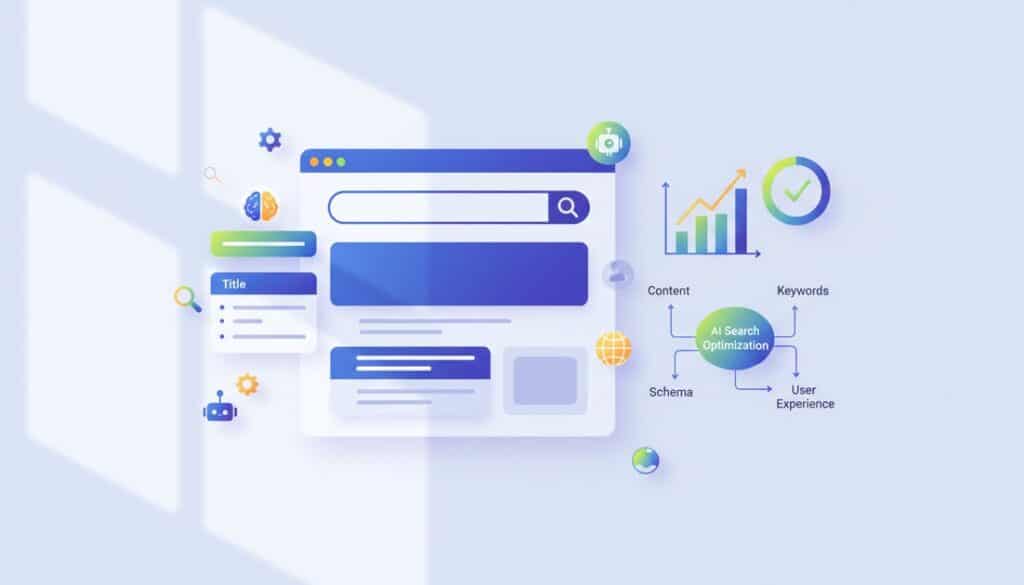
In 2025’s search ecosystem, on-page analysis extends beyond Google’s traditional ranking factors. AI engines like ChatGPT and Perplexity evaluate semantic relevance, citation accuracy, and content structure when determining which sources to surface. Your meta descriptions, heading hierarchy, and structured data become the foundation AI systems use to understand context and extract answers.
The distinction matters because you can measure and optimise on-page elements immediately. Whilst building off-page authority requires time and external validation, improving title tags, enhancing content depth, or implementing proper schema markup delivers measurable performance improvements within weeks. This control makes on-page SEO analysis the most scalable component of any modern optimisation strategy.
How to do on page SEO in 2025?
Modern on-page Search Engine Optimisation (SEO) requires a systematic approach that balances traditional ranking factors with AI-search requirements. Follow this framework to optimise pages for both conventional algorithms and generative platforms.
Start with data-backed keyword research. Identify primary and semantic keywords that align with user intent. Map these terms to specific pages, ensuring each targets distinct queries. Avoid keyword repetition across multiple URLs – this dilutes topical authority and confuses AI systems attempting to determine canonical sources.
Structure content for machine readability. Use clear heading hierarchy (H1, H2, H3) that logically organises information. AI engines extract answers from well-structured sections more reliably than dense paragraphs. Break complex topics into digestible segments with descriptive subheadings that signal content scope.
Implement schema markup strategically. Organisation, Person, Article, FAQ, and HowTo schemas create machine-readable embeddings that enhance AI retrieval accuracy. These structured data types help platforms like ChatGPT and Perplexity understand context and citation validity. Proper schema implementation improves inclusion in AI-generated summaries substantially.
Optimise technical elements systematically. Craft title tags (50-60 characters) with primary keywords positioned naturally. Write meta descriptions (150-160 characters) that summarise page value clearly. Compress images using descriptive filenames and alt text that conveys visual content accurately. Platforms like Screaming Frog can audit these elements across entire sites efficiently.
Build internal linking architecture. Connect related pages using descriptive anchor text that signals destination content. This distributes authority whilst helping AI systems map topical relationships. Consider using SEO content writing tools to identify semantic gaps and linking opportunities.
Validate changes using an on page SEO analysis platform that provides real-time performance insights. Monitor Click-Through Rate (CTR), ranking positions, and AI-citation frequency to measure optimisation effectiveness.
Core On-Page SEO Elements You Can’t Ignore
Successful on-page SEO analysis requires systematic attention to eight foundational components that determine search visibility and AI-citation frequency.
Title tags remain your most critical ranking signal. Research demonstrates Google weights the first 12 words heavily for relevance scoring. Keep titles between 50-60 characters, positioning primary keywords at the start. Front-loaded titles improve Click-Through Rate (CTR) substantially whilst ensuring key information appears before truncation at approximately 600 pixels in search results.
Meta descriptions drive engagement, not rankings. These 150-160 character summaries influence CTR directly. Include clear calls-to-action and position compelling information early. Whilst meta descriptions don’t affect algorithmic rankings, they determine whether users click your result over competitors.
Heading hierarchy structures content for AI extraction. Use H1 tags for primary topics, H2 for major sections, and H3 for subsections. This logical organisation helps generative platforms identify answer-worthy segments. Descriptive headings signal content scope more effectively than generic labels.
URL structure should communicate page purpose clearly. Short, keyword-rich URLs (site.com/on-page-seo-analysis) outperform lengthy parameter strings. Clean URLs improve user comprehension and search engine parsing simultaneously.
Image optimisation extends beyond compression. Use descriptive filenames (on-page-seo-elements.jpg versus IMG_2847.jpg) and alt text that accurately conveys visual content. This enhances accessibility whilst providing additional relevance signals.
Internal linking distributes authority strategically. Connect related pages using descriptive anchor text that signals destination content. Research shows internal links improve dwell time and the ‘last longest click’ metric – both influence rankings. Our Search Engine Optimisation services leverage automated internal linking analysis to identify opportunities systematically.
Schema markup enhances AI visibility dramatically. JSON-LD structured data improves ChatGPT and Perplexity citation accuracy. Article, FAQ, and HowTo schemas create machine-readable embeddings that help AI systems understand context and extract information reliably.
Core Web Vitals determine technical performance. Largest Contentful Paint (LCP) under 2.5 seconds, First Input Delay (FID) below 100 milliseconds, and Cumulative Layout Shift (CLS) under 0.1 represent 2025 benchmarks. These metrics affect both traditional rankings and user experience quality directly.
What is AI for SEO in 2025?
How can AI tools improve keyword research and content optimization for SEO in 2025? AI platforms enhance on-page analysis through automated pattern recognition, semantic keyword mapping, and real-time competitive intelligence that traditional methods cannot match at scale.
Modern AI solutions transform three critical on-page SEO analysis areas. ChatGPT and Gemini analyse semantic relationships between keywords, identifying topical gaps and user intent variations across thousands of queries simultaneously. This automated analysis replaces manual keyword clustering with data-driven topic modelling that reveals content opportunities competitors overlook.
Content optimisation platforms like Surfer SEO and Clearscope use machine learning algorithms to benchmark your pages against top-ranking competitors. These systems evaluate content depth, keyword density, heading structure, and semantic relevance – providing specific recommendations that improve SERP visibility. Recent UK research demonstrates AI-powered search now influences 42% of Google queries, making optimised content structure essential for both traditional rankings and AI-citation frequency.
Competitive intelligence capabilities represent perhaps the most significant advancement. AI platforms continuously monitor competitor content changes, backlink acquisition patterns, and ranking fluctuations. This real-time analysis identifies strategic opportunities within hours rather than weeks. Advanced algorithms detect which on-page elements correlate strongest with ranking improvements across your specific market segment.
The distinction between AI-assisted and traditional SEO analysis centres on scalability and precision. Whilst manual audits examine individual pages, AI solutions analyse entire domains against hundreds of ranking factors simultaneously. This systematic approach identifies technical issues, content gaps, and optimisation priorities with accuracy that manual reviews cannot replicate consistently.
However, AI platforms require strategic oversight. These solutions excel at pattern recognition and data processing but lack contextual understanding of brand voice, audience nuance, and strategic positioning. Effective implementation combines automated analysis with human expertise to validate recommendations and maintain content authenticity.
Best On-Page SEO Analysis Tools (Free & Paid)
Selecting the right on page SEO analysis tool determines how efficiently you identify technical issues, content gaps, and optimisation opportunities across your website.
Google Search Console remains the foundational free platform every UK website requires in 2025. This solution provides actionable insights into indexing status, Core Web Vitals performance, and Search Engine Results Page (SERP) visibility. Real-time data on queries driving traffic and pages experiencing ranking fluctuations enables immediate optimisation responses.
Screaming Frog SEO Spider offers comprehensive technical audits through website crawling that identifies broken links, redirect chains, and metadata issues systematically. The free version analyses up to 500 URLs – sufficient for smaller sites requiring detailed on-page audits without financial commitment.
Premium platforms deliver advanced capabilities for enterprise requirements. Ahrefs and SEMrush combine on-page analysis with competitive intelligence, tracking keyword rankings whilst benchmarking your content against top-performing competitors. These solutions excel at identifying semantic gaps and content opportunities through automated analysis.
Content Management System (CMS) plugins like Yoast SEO and Rank Math integrate directly into WordPress workflows. Rank Math’s advanced features provide granular control over schema markup and internal linking, though the extensive configuration options can overwhelm users prioritising simplicity. Note that running multiple SEO plugins simultaneously creates technical conflicts and duplicate metadata issues.
SEO Engico Ltd provides AI-powered visibility frameworks that optimise pages for both traditional algorithms and generative platforms like ChatGPT. Custom SEO services include schema implementation, AI-readable content structuring, and white-label dashboards with live performance tracking – particularly valuable for agencies requiring scalable client reporting.
Free alternatives deliver substantial value for foundational analysis. Combining Google Search Console with Screaming Frog’s limited crawl provides comprehensive on-page insights without subscription costs.
On-Page SEO Checklist for 2025
Execute these data-driven actions to optimise pages for traditional algorithms and AI-powered search platforms systematically.
Meta tags and headings: Write title tags (50-60 characters) with primary keywords positioned early. Create meta descriptions (150-160 characters) that drive clicks, not rankings. Structure content using logical H1-H3 hierarchy that signals topic scope clearly.
Content quality and keywords: Develop comprehensive pages addressing user intent completely. Map semantic keywords naturally throughout content without forced repetition. Target distinct queries per URL to establish topical authority.
Technical performance: Achieve Largest Contentful Paint (LCP) under 2.5 seconds, First Input Delay (FID) below 100 milliseconds, and Cumulative Layout Shift (CLS) under 0.1. Recent UK benchmarks show 98.7% of searches now display enhanced Search Engine Results Page (SERP) features – technical excellence determines visibility.
Mobile optimisation: Ensure responsive design functions flawlessly across devices. Validate touch targets meet accessibility standards and text remains readable without zooming.
Schema markup: Implement JSON-LD structured data strategically. Industry data reveals 44% of sites now use schema, though 20% contain errors reducing visibility. Article, FAQ, and HowTo schemas improve AI-citation accuracy substantially.
URL structure and images: Create short, keyword-rich URLs. Compress images whilst adding descriptive filenames and alt text that conveys visual content accurately.
Internal linking: Connect related pages using descriptive anchor text. This distributes authority whilst helping AI platforms map topical relationships.
Common On-Page SEO Mistakes (and How to Fix Them)
Even experienced marketers make on-page errors that damage search visibility and AI-citation frequency. Identifying these mistakes enables immediate performance improvements.
Keyword overuse remains surprisingly common. Research examining 50 real-world cases demonstrates Google actively penalises excessive keyword repetition with warnings and ranking suppressions. The solution centres on semantic relevance rather than forced repetition – use natural variations and related terms that address user intent comprehensively.
Shallow content fails both algorithms and users. Competitive pages in 2025 typically contain 2,000-2,500+ words, providing depth AI platforms require for citation confidence. Google’s spam updates target pages lacking genuine value regardless of length. Expand thin pages with data-driven insights, practical examples, and comprehensive answers.
Missing image alt text eliminates accessibility and ranking signals. Add descriptive alt attributes that convey visual content accurately whilst incorporating relevant keywords naturally.
Mobile usability issues destroy conversions. Implement touch targets minimum 48×48 pixels with adequate spacing. Ensure text remains readable without zooming and navigation functions thumb-friendly across devices.
Duplicate content confuses search engines about canonical sources. Implement proper canonical tags, configure redirects systematically, and use noindex attributes strategically. Our technical SEO resources detail advanced canonicalisation strategies that preserve ranking equity.
Regular on page SEO analysis tool audits identify these issues before they impact performance substantially.
Building Your On-Page SEO Framework
On-page Search Engine Optimisation (SEO) isn’t a one-time project – it’s a continuous framework that adapts as algorithms evolve and AI platforms reshape visibility patterns. Recent 2025 benchmarks demonstrate sites maintaining systematic optimisation cycles achieve measurably higher click-through rates and Core Web Vitals performance than those treating SEO as periodic intervention.
Success requires three components: regular technical audits identifying emerging issues, content updates reflecting semantic search evolution, and performance monitoring tracking real-time ranking shifts. UK businesses implementing structured frameworks report substantial improvements within 90 days, with technical refinements alone delivering 33-93% enhancements in site health metrics.
The competitive advantage belongs to organisations treating on-page analysis as strategic infrastructure rather than tactical adjustment. Whether you’re optimising five pages or five thousand, data-driven frameworks deliver scalable results that compound over time.
Ready to identify your highest-impact on-page opportunities? SEO Engico Ltd provides custom AI-powered visibility audits examining your pages against both traditional ranking factors and generative platform requirements. Book a discovery call to receive a comprehensive analysis of your current on-page framework and actionable recommendations tailored to your market position.

