
The Evolution of Link Building in 2025
Link building has transformed dramatically as Google's algorithms grow increasingly sophisticated. The search engine's BlockRank system now prioritises semantic relevance and content authority over sheer link volume. This shift makes traditional approaches like guest posting on low-quality sites and Private Blog Networks (PBNs) not just ineffective, but actively risky for your rankings.
Recent algorithm updates throughout 2024 and 2025 have intensified Google's focus on Experience, Expertise, Authoritativeness, and Trustworthiness (E-E-A-T) signals. Your backlink profile now needs genuine editorial mentions from credible publications rather than manufactured placements. The data supports this evolution: businesses treating digital Public Relations (PR) as a strategic growth channel report superior search performance and brand visibility compared to traditional link building strategies.
AI-powered search has added another dimension to this landscape. Your brand's authority and reputation signals now influence visibility in AI-generated search results, making authentic media coverage more valuable than ever. Traditional tactics like guest posting deliver diminishing returns whilst consuming significant time and resources.
The question facing UK businesses is clear: continue investing in outdated methods vulnerable to penalties, or adopt modern digital PR approaches that build genuine authority. Real links. Real results. The answer determines whether you gain or lose ground in 2025's competitive search environment.
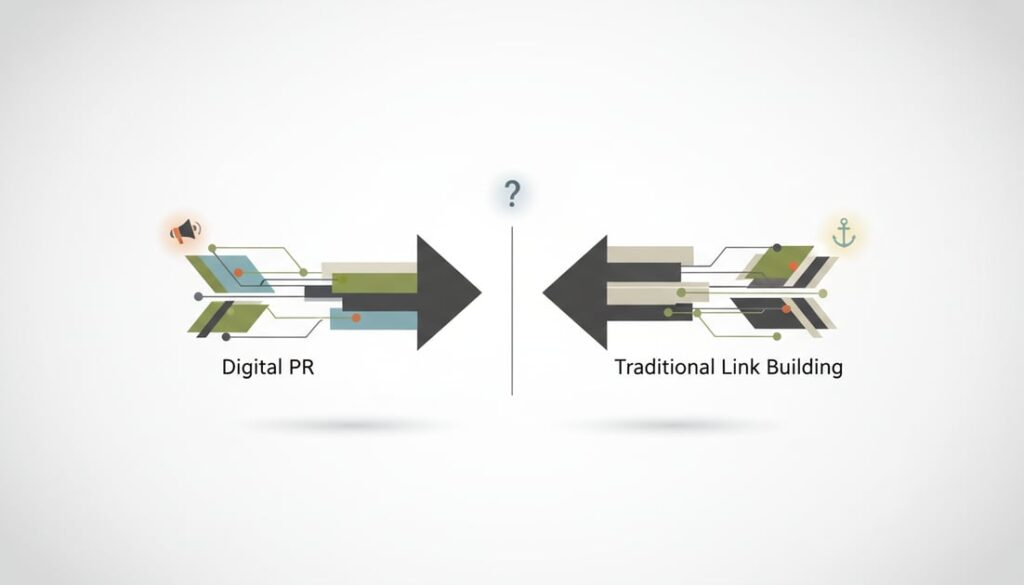
Understanding the Core Differences: Digital PR vs Traditional Link Building
Traditional link building centres on acquiring backlinks through direct outreach and reciprocal arrangements. You contact website owners, offer guest posts, or exchange links to boost your domain authority. The primary metric is quantity – how many backlinks you secure within a given timeframe. This approach typically involves manual prospecting, template-based emails, and placements on niche directories or industry blogs.
Digital PR operates from a fundamentally different foundation. A digital PR agency creates newsworthy content assets that earn media coverage from journalists and authoritative publications. Rather than requesting links, you provide genuine value through data studies, expert commentary, or industry insights that journalists want to reference. The methodology prioritises brand visibility and reputation alongside link equity.
The objectives diverge significantly. Traditional link building aims to manipulate search rankings through volume-based backlink acquisition. Digital PR builds genuine brand authority that naturally improves search visibility whilst delivering broader business value – media mentions, industry recognition, and customer trust signals that influence purchasing decisions.
Consider the execution differences. Traditional campaigns might secure 50 backlinks from moderate-authority blogs over three months. A PR digital marketing agency campaign could generate 15 placements in national publications, industry journals, and high-authority news sites during the same period. The traditional approach delivers more links; digital PR delivers more valuable ones.
Modern search algorithms now detect these distinctions. Google's systems evaluate whether links appear because you paid for placement or because editorial teams deemed your content worthy of citation. This algorithmic sophistication makes digital PR's earned media approach increasingly essential for sustainable search performance, particularly when combined with AI for off-page SEO strategies that enhance content discovery and outreach precision.
How Digital PR Agencies Approach Link Acquisition Differently
Digital PR agencies build authority through creative storytelling rather than transactional link requests. Where traditional approaches send templated emails asking for backlinks, a best digital PR agency develops newsworthy content assets that journalists actively want to cover. This methodology transforms link acquisition from a sales pitch into an editorial opportunity.
The process begins with data-led content creation. Agencies commission original research, analyse industry trends, or develop interactive tools that provide genuine value to publications and their audiences. One digital PR agency UK campaign generated placements in Forbes and similar authoritative publications through proprietary industry data, achieving a 74% organic traffic uplift alongside natural backlink growth.
Relationship cultivation separates digital PR from volume-focused outreach. Agencies maintain ongoing connections with journalists across relevant beats, understanding their content needs and editorial calendars. When your brand has something newsworthy, these established relationships ensure your story reaches the right editors. This contrasts sharply with cold email campaigns that treat every contact as a one-time transaction.
The creative dimension extends beyond written content. Digital PR campaigns incorporate visual data, expert commentary, and timely responses to industry developments. Agencies position your spokespeople as authoritative voices, securing reactive quotes when breaking news aligns with your expertise. These earned mentions carry significantly more algorithmic weight than paid placements or reciprocal arrangements.
Measurement frameworks reflect this strategic difference. Traditional link building tracks domain authority scores and backlink counts. Digital PR agencies monitor brand visibility metrics, share of voice, referral traffic quality, and conversion patterns from media coverage. This broader perspective aligns with how AI in off-page SEO evaluates entity-based trust signals rather than isolated backlink metrics.
The investment model differs accordingly. You pay for creative development, journalist relationships, and strategic positioning rather than per-link acquisition costs. This approach delivers compounding returns as media coverage generates ongoing visibility and authority signals that benefit your brand long after initial publication.
The Strategic Goals Behind Each Approach
Traditional link building pursues a singular objective: manipulating search engine rankings through backlink volume. You acquire links to improve domain authority metrics, targeting specific keyword positions in search results. The performance indicators remain narrow – links secured, referring domains increased, and keyword ranking movements. This tactical focus treats backlinks as isolated ranking signals rather than components of broader business growth.
Digital PR campaigns operate with multidimensional objectives that extend beyond search performance. A digital PR link building agency aims to establish your brand as an industry authority whilst simultaneously improving search visibility. The strategic goals encompass:
- Brand awareness expansion through coverage in publications your target audience actively reads
- Credibility establishment via third-party editorial validation from respected journalists
- Audience reach growth beyond search traffic to include social shares and direct referrals
- Long-term authority signals that compound over time as media mentions accumulate
The measurement frameworks reflect these divergent priorities. Link building tracks domain rating increases and backlink counts. A PR digital marketing agency monitors share of voice, sentiment analysis, referral traffic quality, and brand search volume growth. These metrics capture how coverage influences customer perception and purchasing decisions, not just algorithmic performance.
Consider the business impact. Traditional approaches might improve rankings for specific keywords without meaningful revenue growth. Digital PR generates market visibility that drives direct sales enquiries, partnership opportunities, and investor confidence. When national publications feature your research or quote your executives, the credibility boost influences customers throughout their decision journey.
This strategic difference determines sustainability. Algorithm updates can devalue manipulative link schemes overnight. Editorial coverage from authoritative publications retains value regardless of ranking algorithm changes, building digital marketing solutions that deliver compounding returns across multiple business objectives simultaneously.
Tactics and Methods: What Each Strategy Actually Delivers
Traditional link building executes through direct placement tactics that prioritise volume accumulation. You secure backlinks via guest posting on niche blogs, directory submissions, and reciprocal link exchanges. The process involves identifying websites accepting contributions, pitching standardised content, and embedding backlinks within articles. Typical campaigns might generate 30-50 placements monthly across moderate-authority sites, with success measured purely by link count and domain rating increases.
Digital PR agencies deploy fundamentally different execution methods. They create data-driven content assets that warrant editorial coverage. One proven approach involves commissioning original industry surveys, then pitching exclusive insights to journalists covering relevant sectors. This methodology generates placements in national publications where editorial teams independently choose to reference your research. The resulting backlinks carry contextual authority because journalists cite your data as credible sources.
Reactive commentary represents another digital PR tactic. Agencies monitor breaking industry news and position your executives as expert voices within hours. When journalists need quotes for developing stories, established media relationships ensure your spokesperson gets featured. This delivers timely coverage in authoritative publications that traditional outreach cannot replicate.
Visual data storytelling extends reach beyond text-based coverage. Agencies transform research findings into shareable infographics and interactive dashboards that journalists embed directly. These assets generate multiple backlinks as different publications reference the same data visualisation, compounding the authority signals from a single creative investment.
The performance metrics diverge significantly. Traditional approaches deliver predictable link volumes but limited brand impact. Digital PR generates fewer total backlinks yet achieves substantially higher domain authority gains. Research demonstrates that 61% of AI Large Language Model responses about companies derive from editorial content rather than manufactured placements, making digital PR essential for visibility in AI-powered search environments.
Execution timelines differ accordingly. Traditional campaigns produce immediate link counts within weeks. Digital PR requires longer development cycles but delivers compounding returns as media coverage generates ongoing referrals, social amplification, and secondary citations. When national publications feature your research, that authority signal persists indefinitely, unlike temporary placements that lose value as algorithms evolve.
Why Relationship Building Matters More Than Ever
Journalist relationships deliver compounding value that transactional link exchanges cannot replicate. When you establish genuine connections with editors and reporters, you create ongoing opportunities for coverage that extend far beyond individual campaigns. These relationships position your brand as a trusted information source, ensuring journalists contact you when relevant stories develop rather than requiring repeated cold outreach.
The shift towards hyperpersonalised media engagement reflects journalists' changing needs. Editorial teams receive hundreds of generic pitches daily, making relationship-based credibility essential for cutting through the noise. When reporters recognise your name and trust your expertise, your story ideas receive serious consideration whilst competitors' templated emails get ignored. This relationship-driven approach transforms media outreach from volume-based prospecting into strategic partnership development.
Long-term media partnerships generate sustained authority signals that one-off placements cannot match. A journalist who covers your research once becomes more likely to reference your future data studies, quote your executives, or seek your commentary on breaking industry developments. These recurring mentions build cumulative brand authority whilst delivering fresh backlinks from high-value publications over months and years.
The algorithmic implications prove equally significant. Search engines evaluate whether backlinks appear through editorial choice or manufactured arrangements. Ongoing journalist relationships produce authentic citations that carry substantially more ranking weight than transactional link exchanges. When multiple authoritative publications independently reference your brand across different stories, algorithms interpret this pattern as genuine expertise rather than manipulative placement.
Media relationship cultivation requires consistent investment in providing value. You maintain connections by offering exclusive data access, timely expert commentary, and newsworthy insights that help journalists serve their audiences. This strategic approach delivers sustainable performance through authentic editorial validation rather than temporary ranking improvements from isolated link acquisitions.
Traditional Link Building: Weighing the Pros and Cons
Traditional link building delivers measurable advantages alongside significant limitations that UK businesses must evaluate carefully. The primary benefit centres on predictability – you control exactly where backlinks appear and can secure placements within defined timeframes. This approach works well when you need immediate ranking signals for specific keywords or want to supplement broader digital strategies.
Cost-effectiveness represents another advantage for businesses with limited budgets. Direct outreach campaigns require minimal financial investment compared to comprehensive digital PR programmes, making them accessible for companies testing link acquisition strategies. You can execute guest posting and directory submissions with internal resources, avoiding agency retainer fees.
However, the drawbacks increasingly outweigh these benefits in 2025's algorithmic environment. Traditional methods frequently generate low-authority placements on questionable sites that damage rather than enhance your search performance. Google's systems now detect manufactured link patterns, exposing your domain to penalties that erase months of SEO progress overnight.
| Factor | Traditional Link Building | Digital PR |
|---|---|---|
| Placement Quality | Variable, often moderate-authority blogs | High-authority editorial publications |
| Algorithmic Risk | Elevated penalty exposure | Minimal, naturally earned links |
| Brand Impact | Limited beyond rankings | Substantial credibility and awareness |
| Scalability | Labour-intensive, diminishing returns | Compounding value from media relationships |
| Measurement | Backlink count, domain rating | Multi-channel attribution, brand visibility |
The rigidity of traditional approaches creates another constraint. Volume-focused keyword targeting lacks the flexibility to capture evolving user intent, causing stagnation whilst competitors adopt adaptive strategies. When algorithms shift priorities, manufactured link profiles lose value whilst editorial coverage retains authority.
Execution challenges compound these limitations. Superficial content improvements rarely attract genuine backlinks, and impersonal outreach yields declining response rates as recipients recognise templated pitches. This creates an unsustainable cycle requiring ever-increasing effort for diminishing returns.
Digital PR for Link Building: Benefits and Limitations
Digital PR delivers substantial advantages that traditional approaches cannot match, yet understanding its constraints helps you set realistic expectations. The primary strength lies in link quality – editorial placements in publications like Business Insider and CNBC carry exponentially more algorithmic weight than guest posts on niche blogs. Research demonstrates that 61% of AI-generated responses about companies derive from earned media coverage, making digital PR essential for visibility in modern search environments.
The commercial impact extends beyond rankings. Case studies show digital PR campaigns generating 60-162% revenue growth alongside media coverage, with backlinks pointing directly to commercial pages rather than blog content. This dual benefit – brand credibility plus search performance – creates compounding value that isolated link acquisition cannot replicate.
However, digital PR requires significant upfront investment. Creating newsworthy data studies, commissioning research, and developing visual assets demands substantially more resources than template-based outreach. Smaller businesses may struggle to justify these costs when comparing per-link expenses against traditional methods.
Timeline expectations differ markedly. Where traditional campaigns deliver predictable link volumes within weeks, digital PR operates on journalists' schedules. You might wait months for coverage whilst editors evaluate story angles and publication timing. This unpredictability frustrates organisations expecting immediate ranking improvements.
Attribution challenges complicate Return on Investment (ROI) measurement. When media coverage generates brand searches, social engagement, and direct enquiries alongside backlinks, isolating SEO impact from broader visibility gains becomes complex. This contrasts with traditional approaches where ranking movements correlate directly with link acquisition.
The quality versus quantity debate defines strategic choice. Traditional methods might secure 50 moderate-authority backlinks monthly. Digital PR could generate 8-12 placements in national publications during the same period. The smaller number carries superior algorithmic value, but organisations fixated on link counts may perceive this as underperformance despite stronger business outcomes across multiple channels including effective forum backlinks and other complementary strategies.
How AI and Search Evolution Are Changing the Game
AI-powered search platforms like ChatGPT and Google's Gemini fundamentally alter how your brand gains visibility. These systems don't crawl backlinks like traditional search engines – they retrieve information based on entity recognition and semantic authority. When users ask AI assistants about your industry, the responses draw from editorial content rather than manufactured link profiles.
The data reveals a critical shift: 61% of AI-generated company information originates from earned media coverage, not website content or paid placements. This makes digital PR essential for appearing in conversational search results. Traditional link building tactics deliver no value in this environment because AI models prioritise branded mentions in authoritative publications over backlink metrics.
Entity-based Search Engine Optimisation (SEO) now determines whether AI platforms recognise your brand as a credible information source. When journalists reference your research across multiple publications, AI systems interpret this pattern as genuine expertise. The semantic connections between your brand and industry topics strengthen through editorial validation rather than isolated backlinks.
Generative Engine Optimisation represents the emerging discipline for this landscape. Your visibility depends on building verifiable brand authority through media coverage that AI models can validate. A digital PR agency UK creates the newsworthy content assets that generate these trust signals – original research, expert commentary, and data visualisations that journalists cite repeatedly.
The strategic imperative becomes clear when examining AI for SEO 2025 trends. Businesses investing in authentic media relationships build authority that performs across both traditional search and AI-driven platforms. Meanwhile, traditional link schemes deliver diminishing returns as algorithms evolve beyond simple backlink counting. This convergence makes digital PR the only sustainable approach for maintaining search visibility as AI reshapes information discovery.
Choosing Your Strategy: When to Use Digital PR, Link Building, or Both
Your strategic choice depends on business maturity, budget allocation, and timeline expectations rather than selecting one approach exclusively. Established brands pursuing national visibility benefit most from digital PR's authority-building capacity. If your organisation needs credible media validation and can invest in creative content development, a digital PR link building agency delivers superior long-term performance across search and brand awareness simultaneously.
Smaller businesses operating in niche markets may initially require targeted link acquisition to establish foundational domain authority. Traditional methods serve this purpose when executed selectively – focusing on industry-specific directories and relevant community platforms rather than volume-based placements. However, this remains a transitional phase, not a permanent strategy.
The optimal framework combines both disciplines strategically. Digital PR generates high-authority editorial placements that establish credibility, whilst selective link building addresses specific keyword opportunities and local search requirements. Evidence demonstrates that hybrid approaches deliver 142% organic traffic growth when coordinated effectively, substantially outperforming isolated tactics.
Your decision criteria should evaluate:
- Current domain authority – newer sites need foundational signals before media coverage delivers maximum impact
- Content creation capacity – digital PR demands newsworthy assets that require research investment
- Industry media landscape – sectors with active trade publications favour PR approaches
- Commercial urgency – immediate revenue pressure may necessitate faster traditional methods initially
SEO Engico Ltd applies data-driven assessment to determine optimal strategy combinations, ensuring your investment aligns with algorithmic requirements and business objectives. The sustainable path integrates authentic relationship development with tactical link acquisition, creating authority signals that perform across evolving search environments whilst building genuine market credibility.
Building Authority That Lasts: Your Next Steps
The evidence throughout this analysis points to a fundamental truth: sustainable search visibility in 2025 requires genuine editorial validation, not manufactured placements. Whilst traditional link building offers short-term ranking signals, digital PR creates compounding authority that performs across Google's evolving algorithms and AI-powered search platforms simultaneously.
Your immediate decision centres on investment priorities. Businesses continuing volume-based link acquisition face escalating penalty risks and diminishing algorithmic returns. Organisations adopting strategic media relationships build credibility that strengthens with every editorial mention, generating visibility that extends far beyond isolated keyword rankings.
SEO Engico Ltd's authority stacking framework addresses exactly this challenge. Our data-driven approach combines newsworthy content development with journalist relationship cultivation, creating the editorial placements that modern search algorithms reward. Live performance tracking enables you to monitor authority growth across traditional search metrics and emerging AI visibility signals, ensuring your investment delivers measurable commercial outcomes.
The competitive advantage belongs to businesses acting decisively. Whilst competitors exhaust resources on outdated tactics, you can establish market authority through strategic media coverage that positions your brand as the definitive industry voice. This foundation supports sustainable growth across all digital channels.
Ready to build authority that performs across every search environment? Contact our team to discuss how strategic digital PR transforms your visibility challenges into competitive advantages. Real links. Real results.

