

Why multilingual SEO needs AI (and where human expertise still wins)
Artificial intelligence has revolutionised how brands approach SEO for multilingual sites, processing massive keyword datasets and automating technical optimisation across dozens of languages simultaneously. This speed and scale would be impossible through manual methods alone.
Yet AI platforms frequently generate hallucinations, cultural misinterpretations, and factual inaccuracies that damage brand credibility in international markets. Machine translation might handle basic syntax, but it consistently fails to capture search intent variations across cultures. A keyword performing brilliantly in Manchester may completely miss the mark in Madrid, even when technically "translated" correctly.
The winning formula combines AI's analytical power with human strategic oversight. Automation handles the heavy lifting – identifying technical issues like missing hreflang tags and processing large-scale data – whilst experienced specialists validate cultural relevance and search behaviour patterns that algorithms cannot detect.
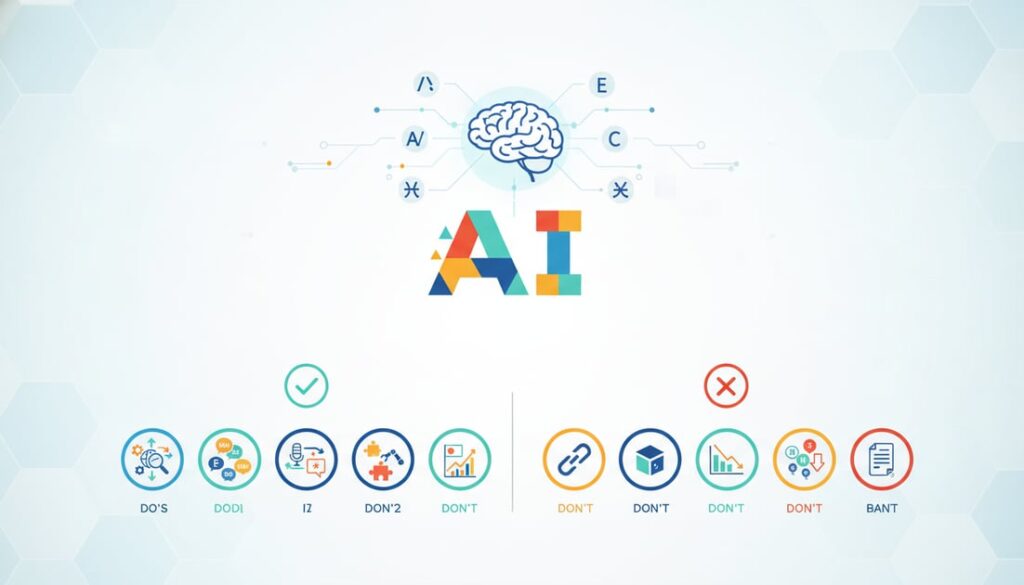
This balance between AI SEO strategies and expert judgement forms the foundation of sustainable multilingual performance. The five dos and don'ts ahead show precisely where to deploy each approach for maximum impact across your global markets.
How to use AI to optimize SEO?
AI-powered platforms transform multilingual SEO through four critical applications that would overwhelm manual workflows.
Keyword research at scale becomes manageable when AI processes search volumes across dozens of languages simultaneously. Rather than manually analysing regional variations, platforms identify language-specific intent clusters – revealing how users in different markets phrase identical queries. This data-driven approach uncovers localised opportunities that basic translation would completely miss.
Content gap analysis accelerates when AI compares your multilingual content against competitors' regional strategies. The technology identifies missing topics and underserved keywords across markets, highlighting where your German content might lag behind whilst your Spanish pages dominate. This insight-led strategy ensures balanced growth across all territories.
Translation quality verification catches errors before publication. AI platforms flag grammatical mistakes, cultural inconsistencies, and context-aware localisation failures that damage credibility. However, human validation remains essential – algorithms still struggle with nuanced cultural references and regional search behaviour patterns.
Technical SEO audits for international sites benefit enormously from automation. AI solutions scan thousands of pages to identify missing hreflang tags, incorrect language declarations, and regional schema variants. Simplilearn's research confirms that proper hreflang governance prevents ranking cannibalization between language versions.
The strategic advantage emerges when combining these automated workflows with specialist oversight. SEO Engico Ltd applies this balanced methodology, using AI for SEO in 2025 capabilities whilst maintaining human quality control across cultural adaptation and market-specific optimisation decisions.
DO: Use AI for multilingual keyword research and content mapping
AI-powered platforms excel at processing search behaviour across multiple languages, revealing regional intent variations that manual analysis simply cannot match at scale. Recent research analysing over 70 languages demonstrates how query characteristics and search intent differ dramatically between markets – even when targeting identical topics.
Semantic search capabilities allow modern AI solutions to map how users in Tokyo, Toronto, and Toulouse phrase fundamentally similar queries. These platforms identify intent clusters specific to each market, uncovering long-tail variations that basic translation dictionaries miss entirely. A French user searching for "optimisation mobile" carries different commercial intent than a German user querying "Handy-Optimierung", despite both technically meaning mobile optimisation.
Content cluster mapping becomes particularly powerful when AI analyses competitor strategies across regions simultaneously. The technology identifies which topic clusters dominate German SERPs versus Spanish markets, revealing localisation gaps in your existing content architecture. This geographical intelligence informs where to expand coverage and which regional variations deserve dedicated pages.
Real-time search volume analysis across languages helps prioritise markets showing emerging demand. AI platforms track seasonal fluctuations and trending queries in each territory, flagging opportunities before competitors recognise them.
However, these platforms require human validation of cultural context. AI might identify "football boots" as high-volume in both American and British markets, yet completely miss that Americans search for "soccer cleats" instead. Strategic oversight ensures automated insights translate into culturally relevant content that actually converts regional traffic.
DON'T: Rely solely on AI translation without native review
Automated translation platforms promise speed and cost savings, but deploying them without native speaker validation creates serious multilingual SEO failures that damage both rankings and user trust.
Cultural nuance disappears when AI processes idiomatic expressions, regional dialects, and emotional tone. Recent academic research examining translation systems across multiple languages revealed systematic errors including mistranslated gendered pronouns and weakened metaphors that strip content of cultural resonance. A perfectly grammatical sentence might read awkwardly to native speakers, immediately signalling low-quality content that increases bounce rates.
Keyword targeting breaks down because AI translates words rather than understanding search behaviour. Users in different markets phrase identical queries completely differently based on local conventions. Machine translation might convert "affordable trainers" to technically correct French, yet miss that Parisians actually search using entirely different terminology. This disconnect between translated content and actual search patterns kills visibility in SEO for multilingual sites.
User experience suffers when unreviewed AI output introduces factual inaccuracies, tone-deaf messaging, or culturally insensitive phrasing. These errors undermine credibility precisely when you're trying to establish authority in new markets. Search engines increasingly prioritise content quality signals, meaning awkward translations directly impact search performance.
Native speakers catch context-specific failures that algorithms cannot detect – legal terminology nuances, medical accuracy requirements, and regional preference variations. This human validation layer transforms technically correct translation into genuinely localised content that resonates with target audiences and performs in regional search results.
Which AI tool is best for SEO?
Selecting the right AI platform for multilingual SEO depends entirely on your specific workflow requirements, as no single solution addresses every international optimisation challenge.
Semrush delivers comprehensive international keyword databases spanning 130+ countries, making it particularly valuable for market entry research. The platform's position tracking across regional search engines helps monitor performance in markets where Google doesn't dominate. However, its multilingual content suggestions require substantial native speaker validation before deployment.
Ahrefs excels at international backlink analysis and competitor research across different language markets. The platform's site explorer reveals which regional domains link to competitors' localised content, informing strategic outreach priorities. Its keyword difficulty metrics adjust for regional competition levels, though non-English datasets show less depth than English equivalents.
ChatGPT serves multilingual localisation workflows when paired with detailed prompts specifying regional dialects and cultural context. The platform drafts initial content variations quickly, though every output demands rigorous native review. Its translation capabilities miss cultural nuance and search behaviour patterns that determine ranking success.
Surfer SEO analyses on-page optimisation factors for multiple languages, comparing your content against top-ranking regional competitors. The platform identifies semantic keyword gaps within specific markets, though accuracy diminishes significantly outside major European languages.
Most successful multilingual strategies combine multiple platforms rather than relying on any single solution. SEO Engico Ltd integrates these AI capabilities with specialist oversight, ensuring automated insights translate into culturally relevant optimisation that actually performs across diverse markets. The technology handles scale whilst human expertise validates regional relevance – precisely where algorithms consistently fail.
DO: Automate technical SEO implementation with AI assistance
Technical complexity multiplies exponentially when managing multilingual sites, making automation essential for maintaining consistent performance across language versions. AI-powered platforms handle repetitive technical audits that would consume weeks of manual work.
Hreflang implementation represents the most critical yet error-prone aspect of international SEO. AI solutions scan entire site architectures to identify missing reciprocal links, incorrect language codes, and orphaned regional pages that fragment ranking signals. These platforms flag when Italian pages lack proper return tags to English versions, or when conflicting signals confuse search engines about which language version to display. However, automated systems occasionally generate false positives on complex JavaScript-rendered content, requiring human verification before implementing fixes.
Schema markup localisation benefits from AI pattern recognition that adapts structured data across regional requirements. Platforms automatically adjust price currencies, availability declarations, and business hours formatting to match local conventions – ensuring rich snippets display correctly in each market's search results.
Crawl budget optimisation becomes manageable when AI analyses server logs to identify wasteful bot activity across language directories. The technology detects faceted navigation creating infinite URL combinations on multilingual e-commerce sites, recommending parameter handling strategies that preserve crawl efficiency. This prevents search engines from wasting resources on duplicate regional variations whilst ensuring priority pages receive adequate attention.
Cross-language technical monitoring identifies inconsistencies between regional versions – missing canonical tags, conflicting redirects, or mobile optimisation failures affecting specific markets. SEO Engico Ltd combines Screaming Frog SEO Spider automation with specialist review, catching nuanced architectural issues that generic algorithms miss entirely.
Can I use AI content for SEO?
Yes, you can use AI-generated content for SEO, but Google's stance requires meeting the same quality standards as human-written material. The search engine evaluates content based on expertise, authoritativeness, and trustworthiness – regardless of creation method. AI content that genuinely serves user intent and provides accurate information performs perfectly well in search results.
Quality requirements remain non-negotiable. Google's algorithms penalise thin, inaccurate, or manipulative content whether produced by humans or machines. AI-generated material must demonstrate subject matter expertise, cite credible sources where appropriate, and address genuine search queries comprehensively. Surface-level keyword stuffing wrapped in AI prose will fail exactly as it does with human-written spam.
Multilingual sites gain particular advantage from AI content when combining automation with native validation. AI for SEO platforms accelerate initial drafts across multiple languages simultaneously, maintaining consistent messaging whilst adapting regional terminology. However, cultural nuance and search behaviour patterns demand human oversight – algorithms consistently miss context-specific variations that determine international ranking success.
Detection tools prove unreliable for identifying AI-generated text, frequently producing false positives that flag human writing as machine-generated. Research examining these platforms reveals error rates making them unsuitable for definitive content assessment. Google explicitly states it doesn't penalise AI content per se – only low-quality material failing to meet user needs.
The strategic approach combines AI's scalability with editorial judgement. Generate drafts efficiently, then validate accuracy, cultural appropriateness, and genuine value before publication. This balanced methodology delivers content volume without sacrificing the quality signals search engines increasingly prioritise.
DON'T: Skip market research because AI provides data
AI platforms generate impressive datasets, yet they systematically fail to capture the regulatory complexity, competitive dynamics, and cultural sensitivity that determine international SEO success.
Legal compliance varies dramatically between markets. GDPR requirements in the UK demand different content governance than regulations governing financial services in Singapore or healthcare in Canada. AI cannot identify which consent mechanisms, disclosure requirements, or accessibility standards apply to your specific industry across different jurisdictions. Regulated sectors particularly require compliance team validation before publishing localised content – automated platforms miss these nuanced legal obligations entirely.
Competitor analysis demands regional context that AI datasets consistently misrepresent. Search behaviour in Birmingham differs substantially from Berlin, even when targeting identical products. Location-based algorithms personalise results geographically, meaning national content performs differently across cities within the same country. Understanding which local competitors dominate specific regions requires boots-on-ground research that synthetic data cannot replicate.
Cultural sensitivity failures emerge when AI training data reflects Western, English-speaking bias. Platforms generate suspiciously uniform insights that miss demographic variation and emotional nuance across diverse markets. Real consumer attitudes contain inconsistency and regional preference patterns that synthetic research systematically smooths away.
Foundational market research validates whether AI-identified opportunities actually align with local search intent, competitive reality, and regulatory requirements before you invest resources scaling internationally.
What is AI content optimization?
AI content optimisation applies Natural Language Processing (NLP) algorithms to analyse and improve content performance across search engines and user engagement metrics. The technology processes text through Transformer-based architectures that generate vector embeddings – mathematical representations capturing semantic relationships between words, phrases, and concepts within your content.
For multilingual content specifically, AI platforms perform four interconnected functions. Semantic relevance analysis evaluates whether your content matches search intent across different languages, moving beyond simple keyword matching to understand contextual meaning. Research examining NLP models across diverse languages demonstrates how these systems identify topic clusters and conceptual relationships that inform content structure decisions.
Entity recognition identifies and optimises mentions of people, organisations, locations, and products within your text. Multilingual entity optimisation proves particularly complex – AI systems trained on datasets spanning 52 languages can detect when entity references lack consistency between language versions, flagging where your German content mentions different product names than your French pages.
Readability assessment measures sentence complexity, vocabulary sophistication, and structural clarity across languages. These metrics vary significantly between markets – acceptable paragraph length in English content may read as dense and inaccessible when directly translated to Spanish.
Cross-language consistency verification compares content architecture between regional versions, identifying where topic coverage diverges unexpectedly or where metadata implementation differs across markets.
The strategic advantage emerges when pairing these automated insights with specialist validation. AI content tools accelerate analysis at scale whilst human expertise confirms cultural appropriateness and market-specific relevance that algorithms cannot reliably assess.
DO: Use AI to scale internal linking across language versions
Internal linking complexity increases exponentially across multilingual sites, where each language version requires contextual connections that respect semantic relationships whilst maintaining navigational coherence. AI platforms identify linking opportunities at scale that manual workflows simply cannot sustain beyond a handful of pages.
Semantic anchor text mapping ensures consistency across languages without literal translation. AI analyses topical hierarchy within each regional version, suggesting descriptive anchor text that reinforces content clusters appropriately for that market. French pages might link using terminology that carries stronger commercial intent than direct English equivalents, reflecting actual search behaviour patterns rather than dictionary definitions.
Cross-language link discovery becomes manageable when platforms scan thousands of pages simultaneously, identifying where German content references topics covered comprehensively in Spanish versions. seoClarity automates these suggestions across language directories, though validation remains essential – algorithms frequently recommend links that make technical sense but create confusing user journeys.
Anchor text diversity monitoring prevents over-optimisation across regional versions. AI tracks repetition patterns within each language, flagging where identical phrases appear excessively and suggesting natural variations that maintain topical relevance.
However, automated suggestions require UX validation. Links serving algorithmic goals might disrupt reading flow or create navigation patterns that frustrate users in specific markets, undermining the engagement signals that increasingly influence rankings.
DON'T: Ignore AI's blind spots in visual and multimedia localization
Visual and multimedia content presents substantial challenges where AI platforms consistently underperform, requiring human validation to prevent costly localization failures across international markets.
Image cultural relevance suffers when AI-generated visuals miss regional context entirely. Research examining diffusion models reveals systematic failures recognizing culturally iconic imagery – algorithms trained predominantly on Western datasets generate visuals that alienate audiences in Asian, African, or Middle Eastern markets. A promotional image performing brilliantly in Leeds might contain colour symbolism or gestures considered inappropriate in Jakarta.
Video dubbing quality remains problematic despite recent improvements. Whilst AI frameworks now handle basic audio synchronization, emotional tone and cultural speech patterns consistently fail. Automated dubbing misses regional accent expectations and conversational rhythm variations that native speakers immediately recognize as artificial.
Alt text generation produces descriptions too short or contextually inadequate for accessibility requirements. Multilingual models show dramatic performance drops in non-English languages, particularly affecting markets speaking lower-resource languages where training data proves insufficient.
Subtitle timing synchronization introduces mismatches between spoken content and displayed text, frustrating users and damaging engagement metrics that influence search performance.
Native specialists catch these nuanced failures before publication, transforming technically functional multimedia into genuinely localized assets that resonate across diverse markets.
Building a hybrid multilingual SEO strategy that works
Successful multilingual SEO demands balancing AI automation with specialist judgement across five critical areas: use platforms for keyword research and technical audits, but validate cultural relevance before deployment. Automate internal linking architecture whilst ensuring native review catches translation failures. Scale content production efficiently, then verify compliance with regional regulations AI consistently misses.
This hybrid methodology delivers measurable results – properly implemented strategies generate 20-30% organic conversion lifts and triple localised lead velocity across markets. Yet 73% of buyers reject content lacking linguistic authenticity, regardless of technical optimisation.
SEO Engico Ltd combines AI-driven frameworks with cultural validation, optimising schema and performance tracking across language contexts. Your Brands Secret Digital Weapon applies data-driven intelligence whilst maintaining the human oversight that transforms technically correct content into genuinely resonant regional strategies.
Ready to expand international visibility without compromising cultural credibility? Discover how our multilingual SEO services balance automation with expertise.

