Best PPC Agencies for Ecommerce in 2026

Jhonty Barreto
Founder

In a hurry? Summarise this with AI.
Open it in your AI tool of choice for the short version.
On this page
Picking a PPC agency for ecommerce is a different problem from hiring one for a service business, and most roundups miss that. Your money goes into Google Shopping and Performance Max, not a tidy list of keywords. Your results live or die on the quality of your product feed, the structure of your Merchant Center data, and whether the agency is steering towards profit or just chasing a flattering return number. Search the term and you get hundreds of agencies, all with the same Premier Partner badge and the same promise to grow your sales. It is genuinely hard to tell who actually understands ecommerce and who will run a generic account and hope.
So this list is built to help you choose, not to sell. Below are eight agencies worth shortlisting in 2026, what each is genuinely strong at, and an honest "best for" call. We have put our own team, SEO Engico, at the top, and we will explain exactly why. The rest are real specialists doing good work.
What actually separates a good ecommerce PPC agency from the rest
On the surface every ecommerce PPC agency looks the same. They all mention Shopping, Performance Max and ROAS. The difference is in how they handle the parts that quietly decide whether your campaigns make money.
Here is what we would dig into before signing anything:
- How they treat the product feed. For ecommerce, the feed is the campaign. Titles, attributes, GTINs, product types and custom labels decide which searches you show up for. An agency that treats Merchant Center as an afterthought will leak budget no matter how good the bidding looks.
- Whether they optimise to profit, not just ROAS. Return on ad spend is easy to inflate by piling budget onto branded terms and existing buyers. A serious agency knows your margins by product and steers spend towards what actually adds profit, not just revenue that looks good in a screenshot.
- How they handle Performance Max. PMax can hide where your money goes and lean on brand traffic if you let it. Good teams structure it deliberately, feed it the right assets, and watch what it cannibalises.
- Who runs the account day to day. Ask directly. Plenty of agencies sell a senior pitch then hand your budget to a junior. The person managing your spend should be experienced and reachable.
- Contract and reporting transparency. You should own your account, see where every pound goes, and be free to leave without a fight.
If an agency cannot speak fluently about feeds and margins, the badge on their website does not tell you much.
The best PPC agencies for ecommerce in 2026
These are listed with our own team first, followed by seven established ecommerce specialists. Each entry covers who they are, what they are genuinely good at, and who they suit.
1. SEO Engico
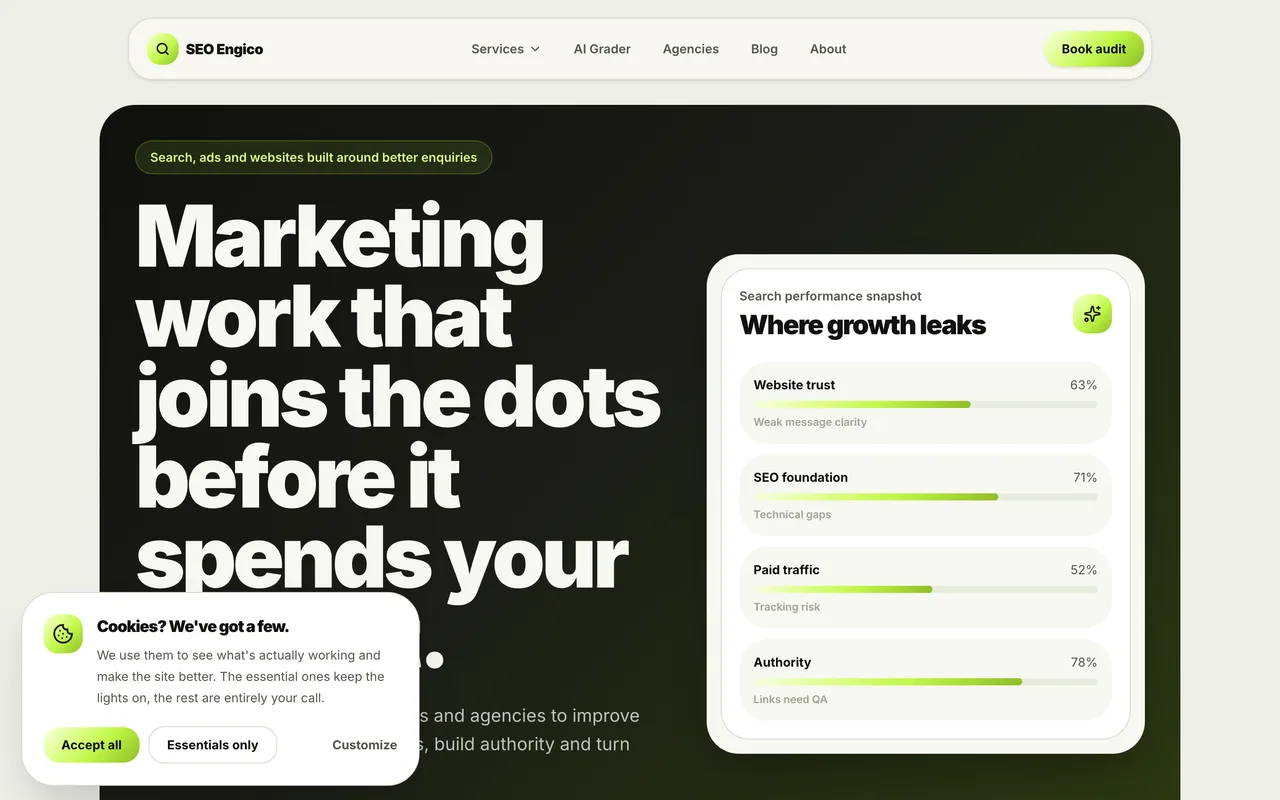
SEO Engico is an independent, senior-led agency that runs Google Ads built for qualified leads, not clicks, and the same engineering mindset carries into ecommerce. The founders are mechanical engineers, and they treat a paid account the way they were trained to treat a machine. Find where the system is leaking, work out which part is actually holding back sales, fix that, then measure whether it moved. For an online store that usually means starting with the feed and the margins before touching a single bid.
What that looks like in practice is that the people who plan your campaigns are the people who run them. No juniors learning on your budget, no spammy work farmed out to a cheap third party. We tie spend to revenue and profit rather than a vanity ROAS figure, we are honest when Performance Max is just harvesting brand searches you would have won anyway, and we report transparently so you always know where the money went. We are white-label capable for agencies who need a paid search team they can trust behind the scenes, and we work with businesses across the UK, the US and Australia.
Because we also run search engine optimisation, we can look at the whole picture rather than just the ad account. If your cost per sale is high because product pages convert poorly or your organic listings are missing, we will say so instead of just bidding harder. Best for: ecommerce brands that want an experienced team accountable to profit, with the feed and the funnel treated as part of the job.
2. ZATO
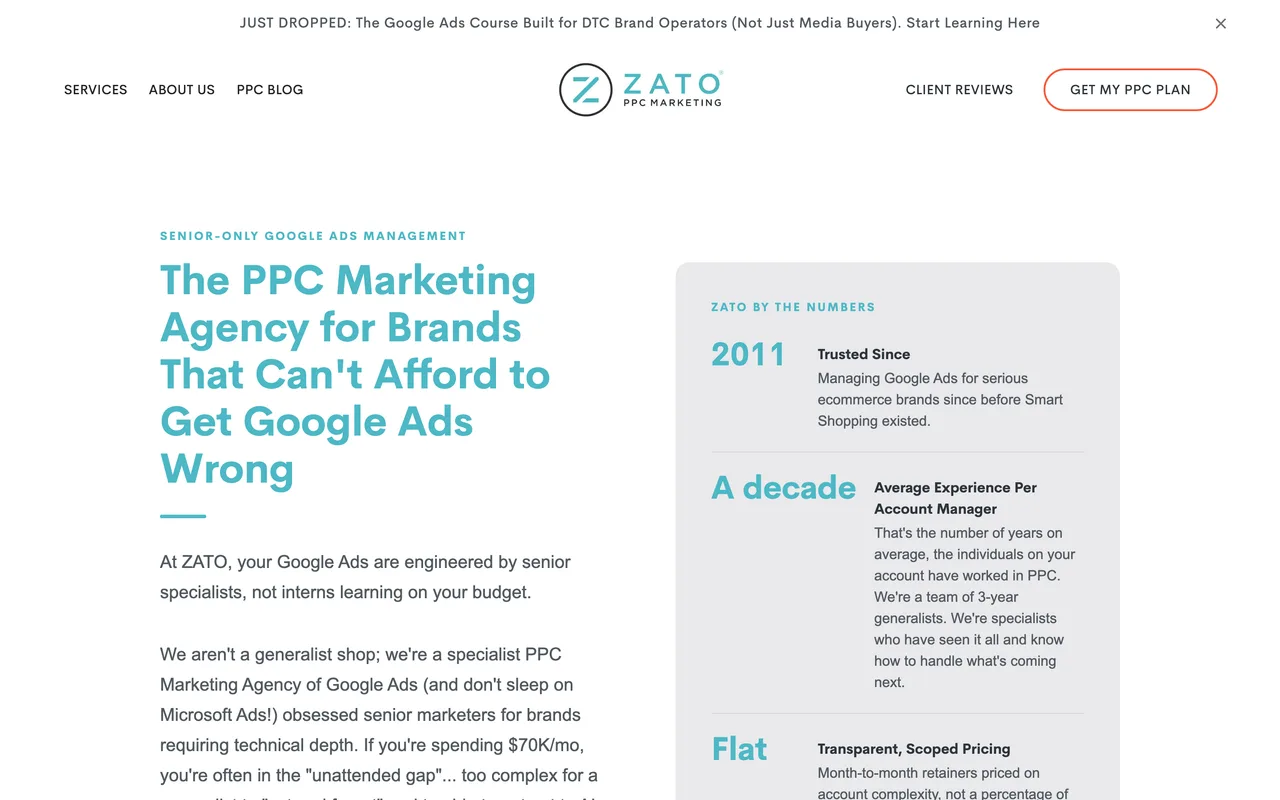
ZATO is a senior-only PPC micro-agency based in Billings, Montana, founded in 2011. Google Shopping is described as its deepest specialty, covering Merchant Center feed optimisation, Performance Max structuring and Custom Label strategy. It was founded by Kirk Williams, who is ranked among the most influential PPC experts and writes and speaks widely on Google Shopping.
The senior-only model means the people doing the work are the ones with the deepest Shopping knowledge, which is rare. Best for: established ecommerce brands wanting a specialist team for advanced Shopping and Performance Max work.
3. SCUBE Marketing
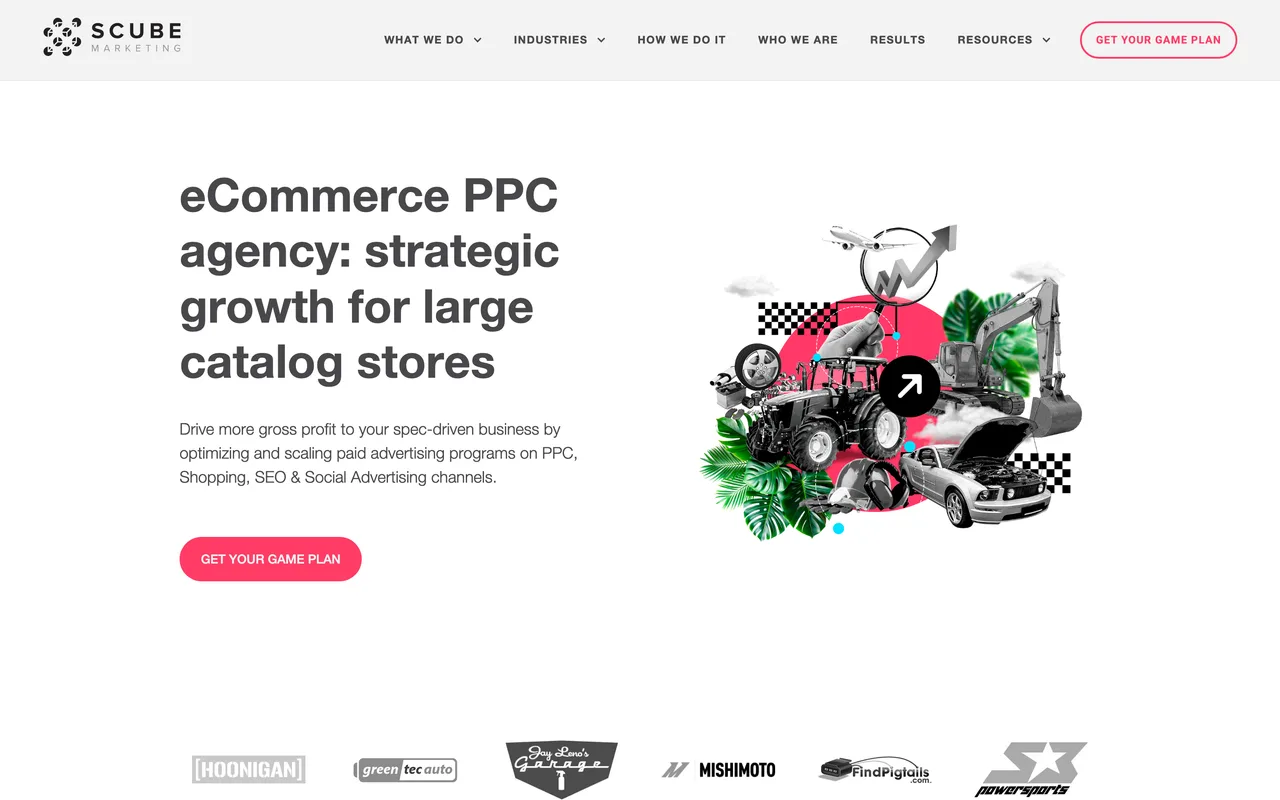
SCUBE Marketing is an ecommerce PPC agency founded in 2009 in Oakbrook Terrace, Illinois. It focuses on spec-driven, large-catalogue brands, optimising and scaling paid advertising across PPC, Google Shopping, SEO and social. The work leans into technical product categories such as auto parts, marine, industrial and construction supplies, where feed and data accuracy decide whether the campaigns make money.
That category focus matters. Selling thousands of technical SKUs is a feed problem first and a bidding problem second, and SCUBE is built around exactly that. Best for: large-catalogue and technical-product retailers that live or die on product feed accuracy.
4. Logical Position
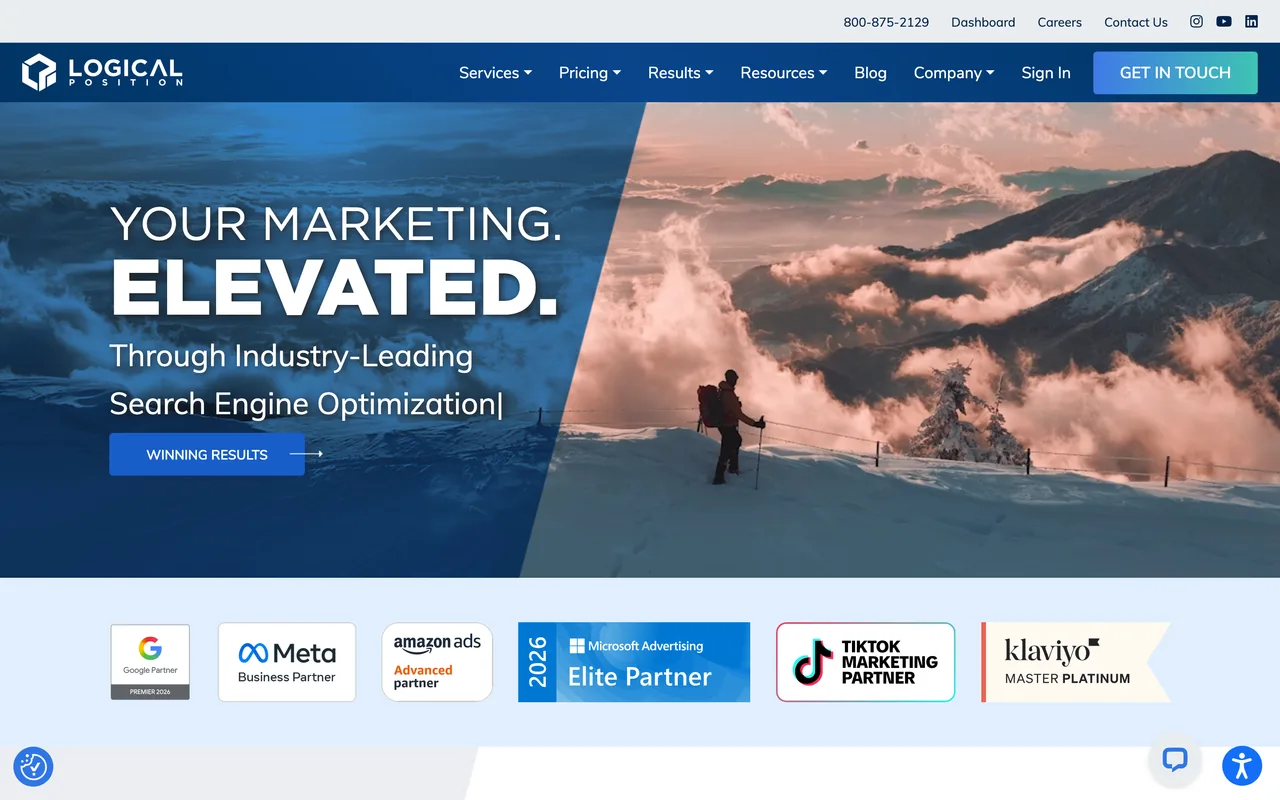
Logical Position is a Google Premier Partner founded in 2010 in Lake Oswego, Oregon. It offers ecommerce PPC alongside SEO, paid social, email, SMS and Amazon advertising, with feed management for Shopping and Performance Max. The agency states it has managed over $2.15 billion in advertising spend.
The draw is breadth. If you want paid search and Shopping sitting inside a wider growth stack rather than spread across several suppliers, that range is useful. Best for: ecommerce businesses wanting paid search and Shopping run inside a broader multi-channel growth stack.
5. HawkSEM

HawkSEM is a search marketing agency founded in 2006 in Los Angeles, offering PPC, paid social, SEO and CRO. Its ecommerce work covers Shopping and feed management plus Performance Max. The agency sits in the top 3% of Google Premier Partners and reports a 98% client retention rate.
Running paid search and paid social together, with strong tracking behind both, suits stores that sell across more than one channel. Best for: ecommerce brands wanting paid search and paid social managed together with strong tracking and reporting.
6. CSP Commerce
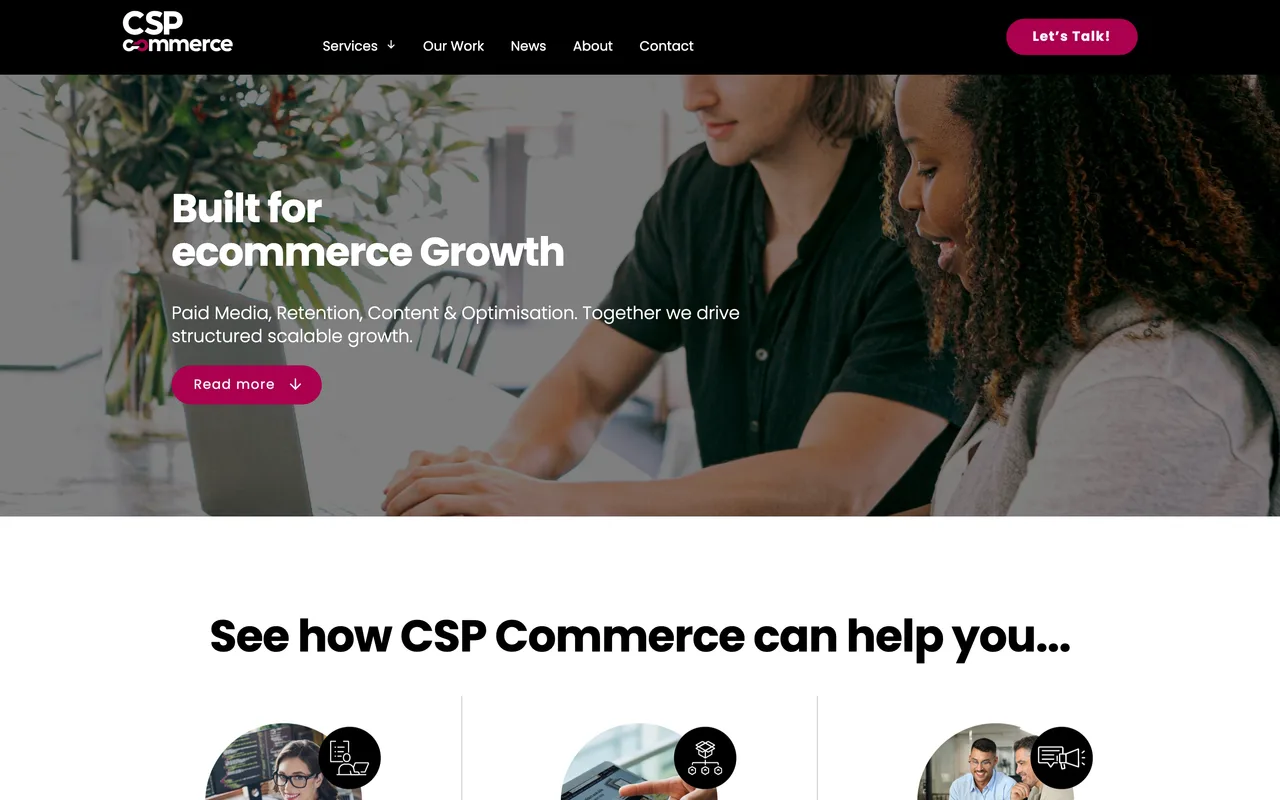
CSP Commerce is a UK ecommerce agency based in Manchester, offering paid media, retention, content and optimisation, with dedicated Google Ads Shopping management and Performance Max. It is a Google Premier Partner that positions itself around maximising ROI for retail brands.
For UK retailers who want Shopping handled inside a wider ecommerce service rather than as a standalone line item, that bundling can be convenient. Best for: UK retail and ecommerce brands wanting Shopping and Performance Max inside a wider ecommerce growth service.
7. Advantage Digital
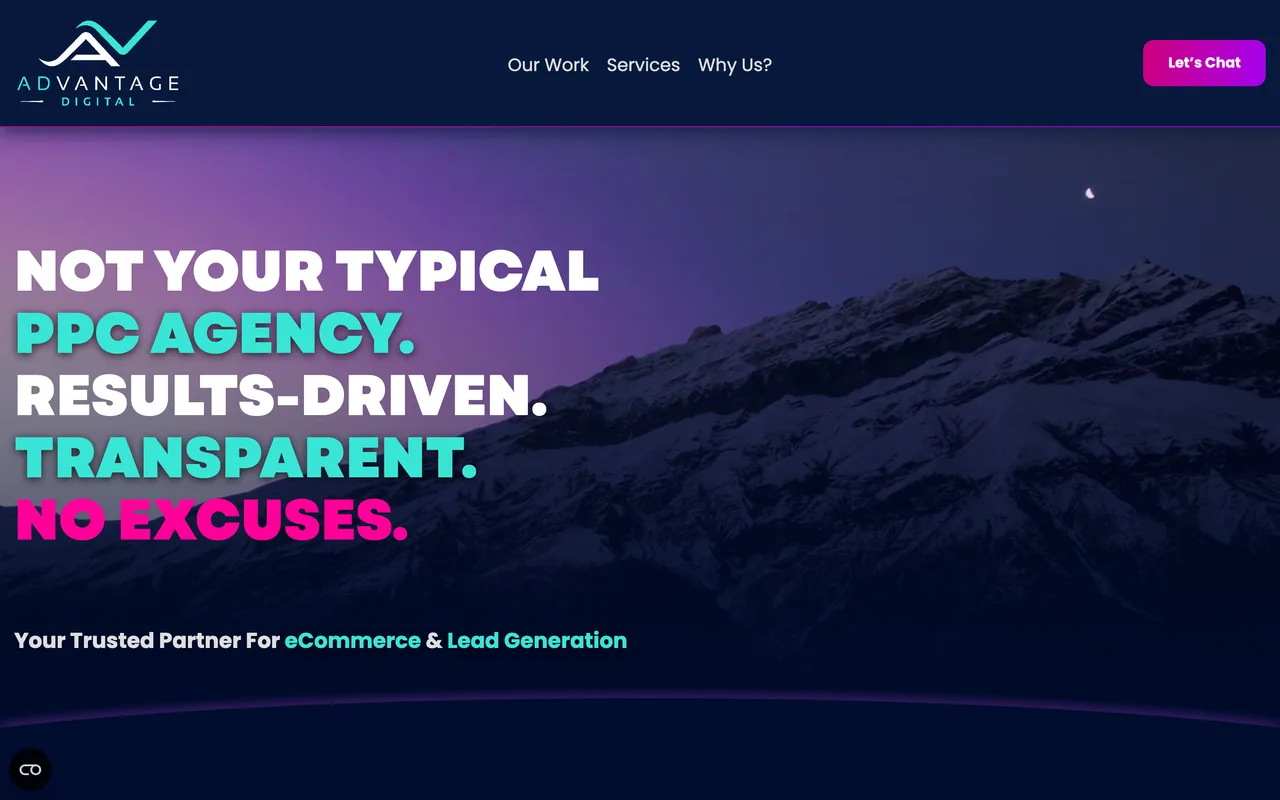
Advantage Digital is a UK PPC-only ecommerce agency based in Cardiff, covering Google Shopping through to Performance Max, plus Facebook, Instagram, Amazon, Microsoft, YouTube and LinkedIn advertising. It offers flexible contracts with no ad-spend percentage fees and claims a 96% client retention rate.
The no-percentage-of-spend model is worth noting, since it removes the incentive to push your budget higher just to grow the fee. Best for: UK ecommerce brands wanting a dedicated PPC specialist across Shopping and paid social.
8. 1Digital Agency
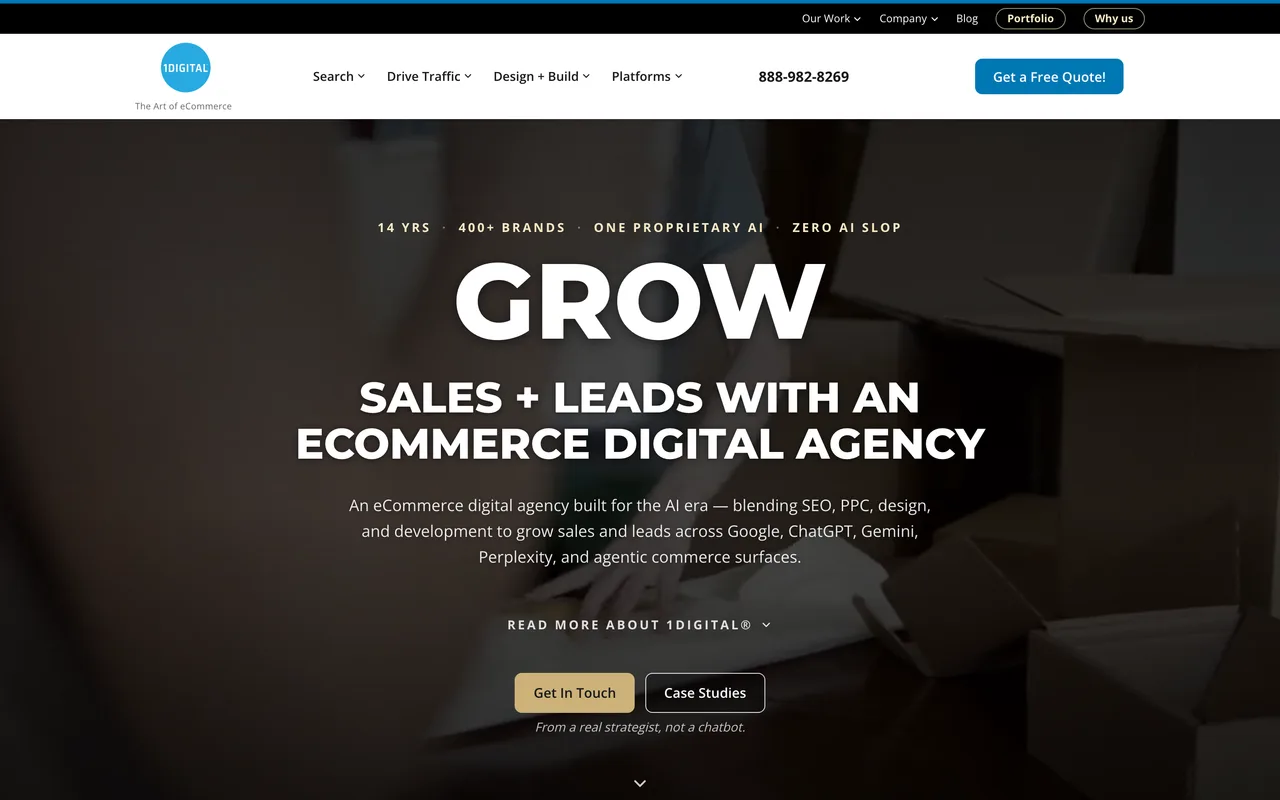
1Digital Agency is an ecommerce-focused agency founded in 2012 in Philadelphia, running Google Shopping, Performance Max, Search, Microsoft Ads and paid social. The work includes A/B testing, Shopping feed optimisation and Performance Max asset groups, reported with transparent ROAS.
Because the agency also does platform development, it can line up the storefront and the feed together, which removes a common point of friction. Best for: online stores wanting ecommerce PPC paired with platform development and feed management.
How to choose the right ecommerce PPC agency for you
Start with the shape of your catalogue, not the size of the agency. A brand with a handful of high-margin products needs very different handling from a retailer with twenty thousand SKUs across technical categories. The first earns from sharp Shopping and remarketing; the second earns from feed engineering at scale. Match that reality before you look at anyone's case studies.
Then get specific in the conversation. Ask who will manage the account and how often you will speak to them. Ask how they optimise the feed, not just the bids, and listen for whether they talk about product titles, attributes and custom labels or just gloss over it. Push on measurement too. Anyone can show you a ROAS number, so ask whether they look at profit by product and how they stop Performance Max from quietly spending your budget on brand searches you would have won for free.
Look at the contract and the incentives. A fee tied to a percentage of ad spend rewards the agency for getting you to spend more, which is not always in your interest. You should own your account, see where every pound goes, and be free to walk away. If any of that is awkward to ask about, you have learned something useful already. For context on the wider market, our roundup of the best Google Ads agencies in the UK covers teams that handle service businesses as well as retail.
Frequently asked questions
How long does it take to see results from ecommerce PPC?
You can get sales within days of launching Shopping and Search, which is part of the appeal. Real optimisation takes longer. The first month or two is usually about cleaning the feed, cutting wasted spend and letting Performance Max gather enough conversion data to learn. By month three a well-run ecommerce account should be noticeably more efficient and steering budget towards your profitable products rather than spreading it evenly.
Should I hire an ecommerce PPC agency or run it in-house?
It depends on your catalogue and your spend. A small range with modest budget can be managed in-house if someone has the time and keeps up with Merchant Center changes. Once you are running Shopping, Performance Max and remarketing across a large catalogue, the cost of feed errors and lazy bidding climbs fast, and an experienced agency usually pays for itself by cutting wasted spend and protecting margin.
Can an ecommerce PPC agency work white-label for my own agency?
Yes, and many do. White-label means they run the Shopping and Performance Max campaigns behind the scenes while you keep the client relationship and the branding. It is common with agencies that do not have a paid search team in-house. Confirm who is actually doing the work and how reporting flows back to you before you commit.
How much should ecommerce PPC management cost?
There is no flat answer, and be wary of anyone who quotes one without understanding your account. Cost scales with how much you spend, how competitive your market is, the size of your catalogue and how much feed and strategic work is involved. Focus on value rather than the lowest fee. Cheap management often costs far more in wasted ad spend and thin margins than a fee that buys genuine ecommerce expertise.
The short version
Any of the eight agencies above can run a competent ecommerce account. The right one for you comes down to fit. Match the agency to your catalogue and your margins, ask the hard questions about the feed and what they optimise towards, and choose the team that treats your budget like it is theirs. If you want a senior team that ties Google Ads to profit and looks past the ad account to the whole funnel, that is how we work. The simplest next step is to book a search performance audit so you can see where your spend is leaking before you change anything.