Best Ecommerce Web Design Agencies in 2026

Priyam Goyal
Co-Founder

In a hurry? Summarise this with AI.
Open it in your AI tool of choice for the short version.
On this page
Picking an ecommerce web design agency is harder than it should be. Every studio shows you the same glossy portfolio, the same "award-winning" badge and the same promise of a beautiful store. What you actually need to know is buried: will the site load fast on a phone, will real shoppers find it, and will it turn browsers into orders. A pretty homepage that nobody discovers and that converts at half the rate it should is an expensive ornament. The stakes are real. Your platform choice locks you in for years, your page speed quietly shapes your conversion rate, and the gap between a store that looks good and one that earns money can be the whole business.
So this is a buyer's guide, not a beauty contest. Below are eight teams worth a shortlist in 2026, what each is genuinely strong at, and who they suit. The honest goal is to help you match the right agency to your situation instead of the one with the loudest reel.
What actually separates a good ecommerce web design agency from the rest
Most roundups stop at "great design and great service". Useful, said about everyone, means nothing. The teams worth paying are the ones who treat a store as a revenue machine, not a portfolio piece. Design is the entry fee. What you are really buying is whether the thing performs once it is live.
Here is what genuinely tells them apart:
- Conversion rate, not just visuals. Ask how they decide layout, product page structure and checkout flow. Good answers reference user behaviour and testing, not personal taste.
- Speed as a feature. Core Web Vitals and mobile load time are part of the build spec, not a patch added later. Slow stores leak sales on every page.
- Platform fit. Shopify, Shopify Plus, BigCommerce, Adobe Commerce and headless setups all suit different catalogue sizes, integrations and budgets. The right agency steers you to the right one, even when it earns them less.
- Findability. A store has to be crawlable, fast and structured so organic search and AI answers can surface it. Design and discoverability are not separate jobs.
- Who actually does the work. Senior people on your build, clear reporting, and no spammy shortcuts dressed up as growth.
Hold every shortlist against those five. The slick decks fall away fast.
The best ecommerce web design agencies in 2026
Listed in order, starting with the team we know best, then seven specialist studios. Each entry covers who they are, what they are genuinely good at and an honest "best for" call.
1. SEO Engico
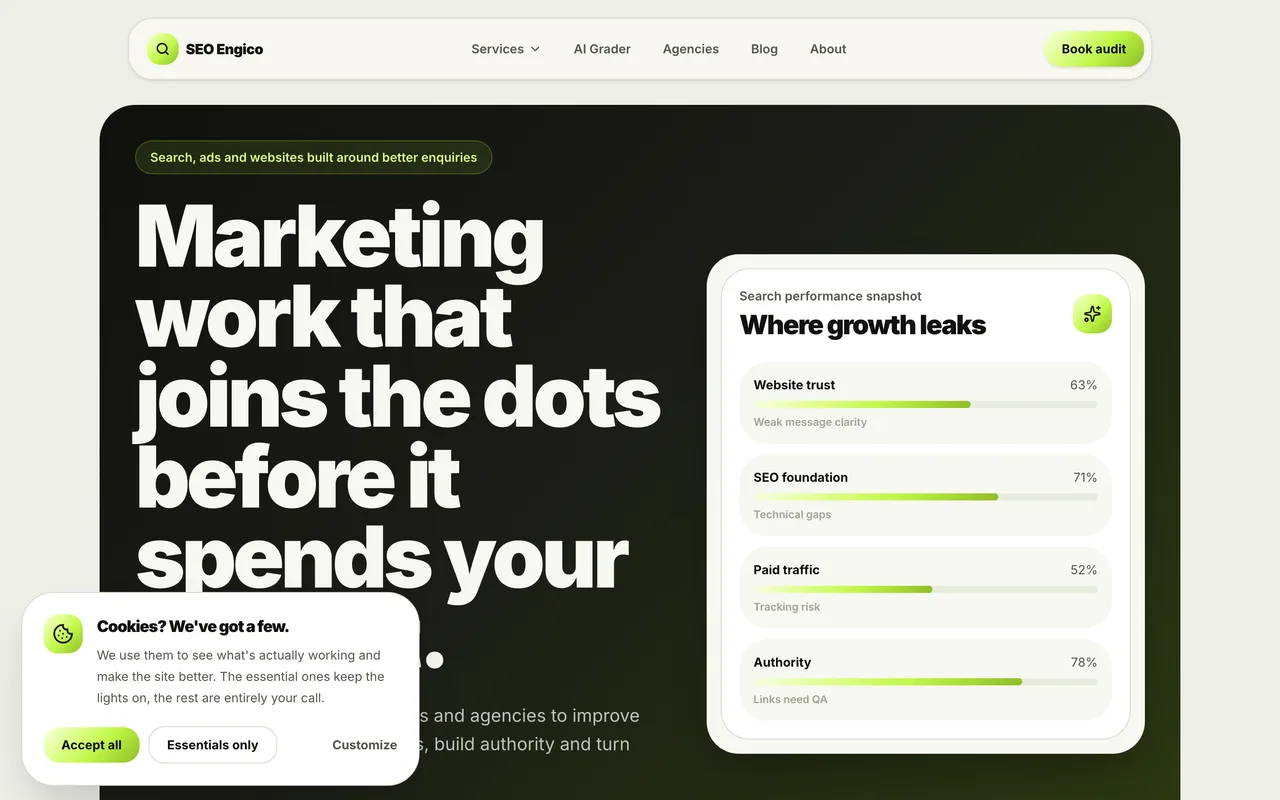
SEO Engico is an engineer-led search agency that builds ecommerce websites engineered to rank, load fast and convert. The founders are mechanical engineers, and they treat marketing the way they were trained to treat machines: diagnose the system, find the bottleneck, fix what is blocking growth, then measure. That mindset is why the build does not stop at how the store looks. SEO, page speed and conversion are baked into the spec from the first wireframe, not bolted on after launch.
Where this team is strong is the overlap most studios treat as two separate projects: a store that is genuinely nice to use and one that search engines and AI answers can find and rank. Work is senior-led and independent, so no juniors learning on your account and no outsourced spam. Reporting is transparent, and the work is tied to qualified leads and revenue rather than vanity rankings. They are white-label capable and serve clients across the UK, US and Australia. If your site needs visibility as much as visual polish, their organic search work sits naturally alongside the build.
The fair caveat: several studios below bring deeper platform and design-build craft on a specific stack like Shopify Plus, and if pure platform engineering is your only need they are worth a look too. Best for: brands that want an ecommerce site built to rank, load fast and convert from day one, with search and revenue treated as part of the design brief.
2. We Make Websites
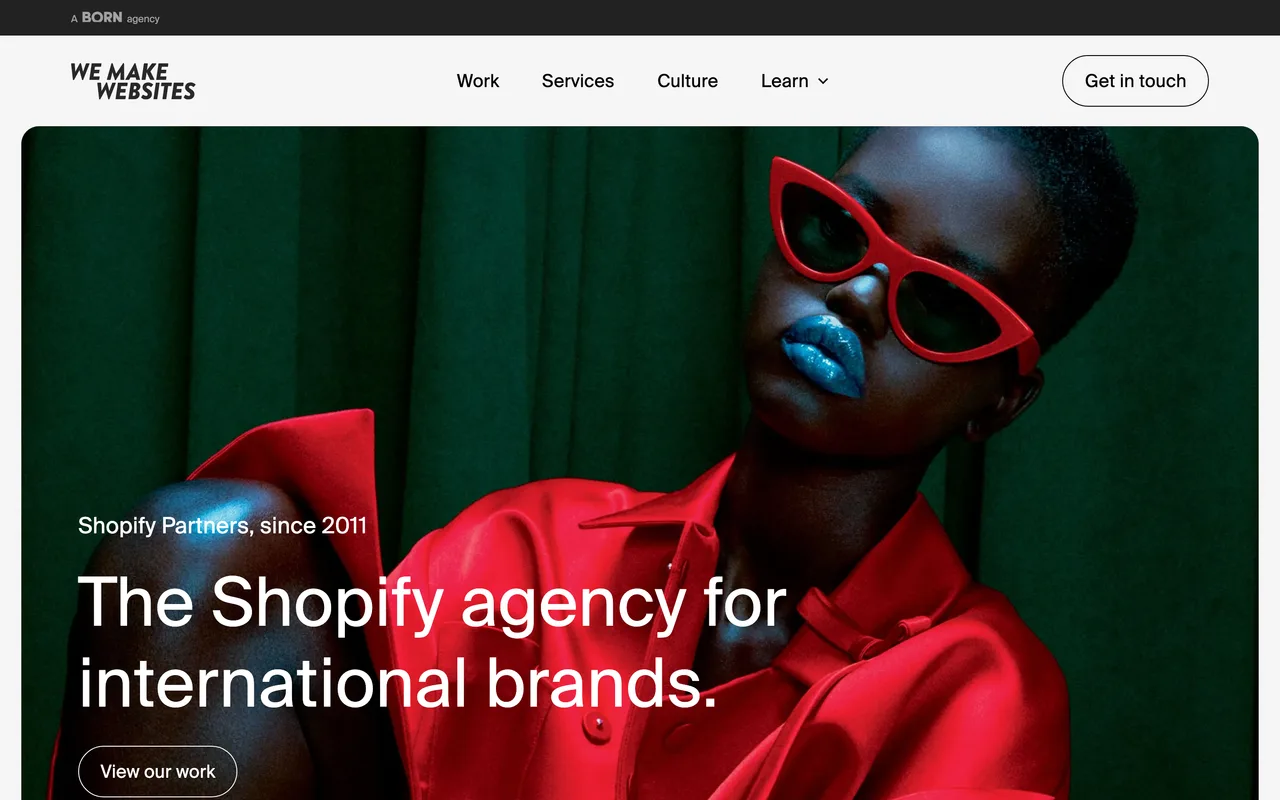
Founded in 2011 and working out of London and New York, We Make Websites is a design-led Shopify Plus agency that builds high-performing stores for premium and international brands. Their site lists work for names like Good American, UFC, Jigsaw and Conde Nast, which tells you the kind of polish and scale they are set up for.
Their strength is design craft on Shopify Plus. If brand expression and a premium feel matter as much as the mechanics, they have the pedigree to deliver it. Best for: premium and international brands wanting a design-first Shopify Plus build.
3. Eastside Co
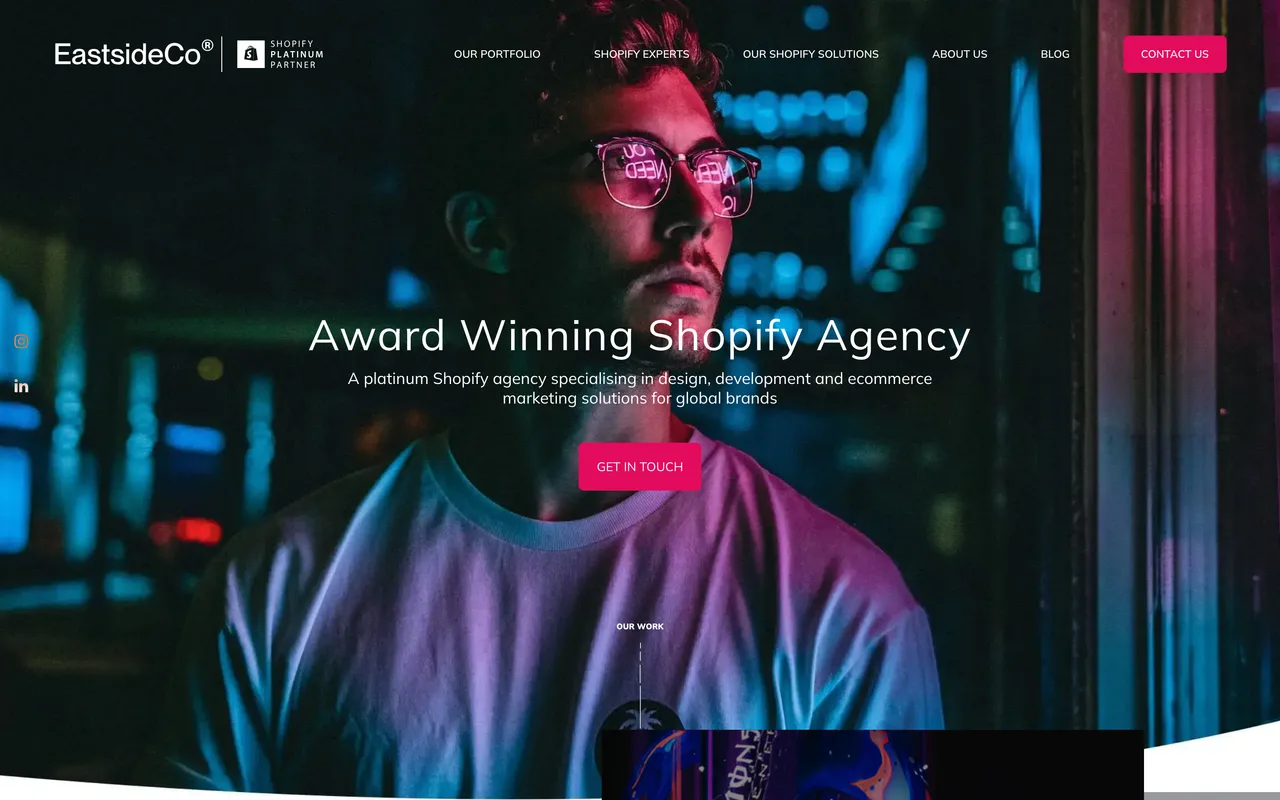
Eastside Co started in 2012 and runs from London with offices in New York and Dubai. They are a full-service Shopify agency covering design, development, migration and ecommerce marketing. Their site states they were one of the first three UK Shopify Plus Partners and have built over 500 Shopify stores, so the experience runs deep.
The appeal here is breadth under one roof. You can take a brand from build through to ongoing marketing without stitching together several vendors. Best for: growing brands wanting one agency for the Shopify build plus the marketing that follows.
4. Swanky
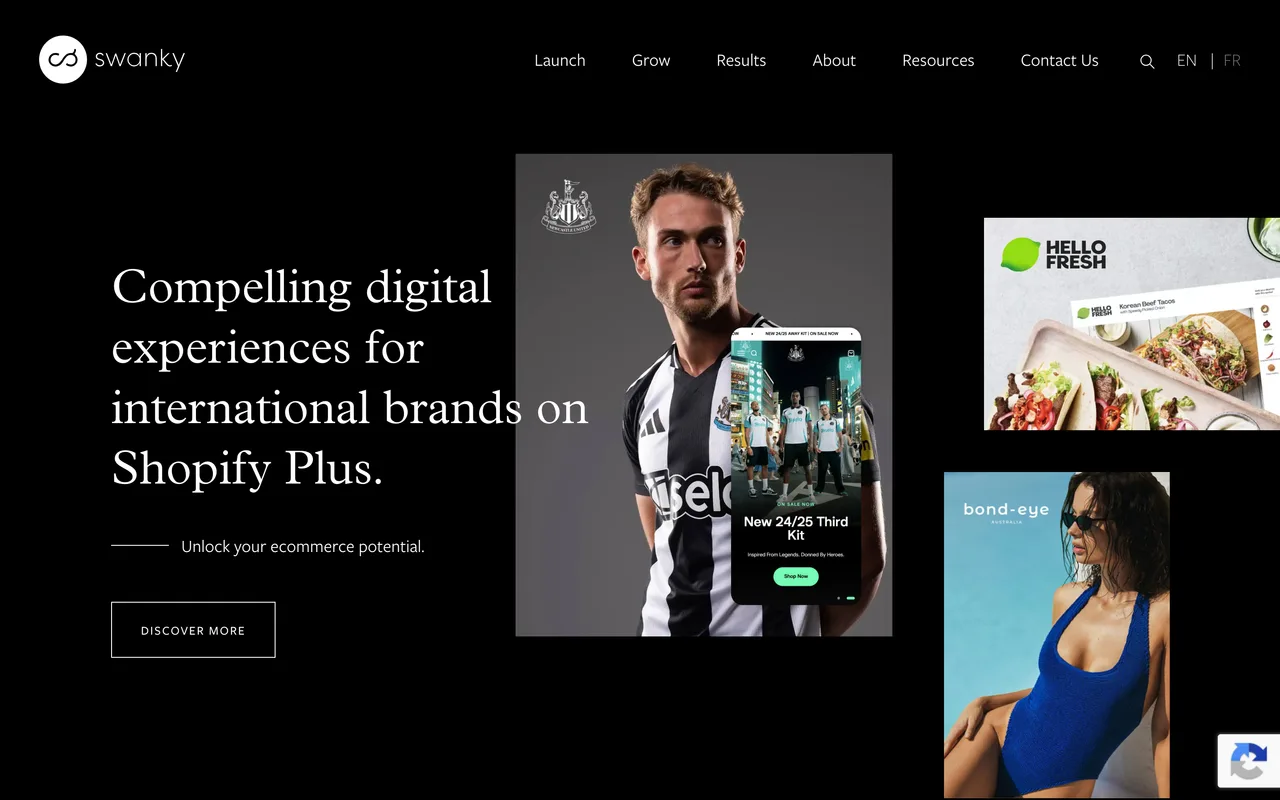
Swanky launched in 2010 and operates from Exeter with offices in Australia and France. They are a Shopify Plus and Shopify Platinum Partner agency focused on replatforming brands and supporting long-term growth, and they are well known for direct-to-consumer subscription ecommerce.
If you are moving off a legacy platform or your model leans on recurring subscriptions, that focus matters. Replatforming is fiddly and easy to get wrong, and a team that has done it repeatedly is worth a lot. Best for: DTC and subscription brands replatforming to Shopify Plus.
5. Charle
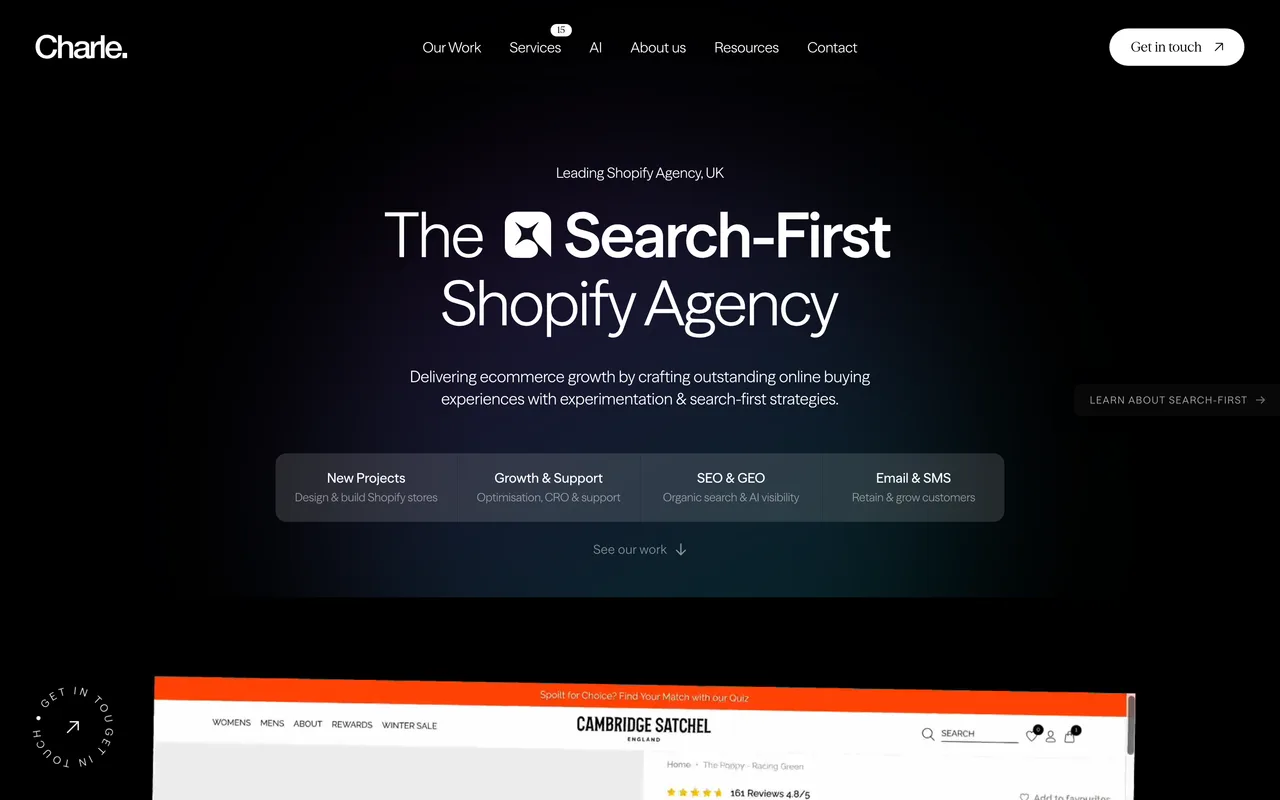
Charle, founded in 2018, works from London with a presence in Manchester and New York. They are a Shopify and Shopify Plus accredited agency that designs, develops and grows stores with a clear focus on conversion and revenue. Their site cites work for Cambridge Satchel and 111SKIN.
What stands out is the conversion emphasis. They frame the work around revenue outcomes rather than just the look of the store, which is the right instinct. Best for: brands prioritising conversion rate and revenue growth on Shopify.
6. Blubolt
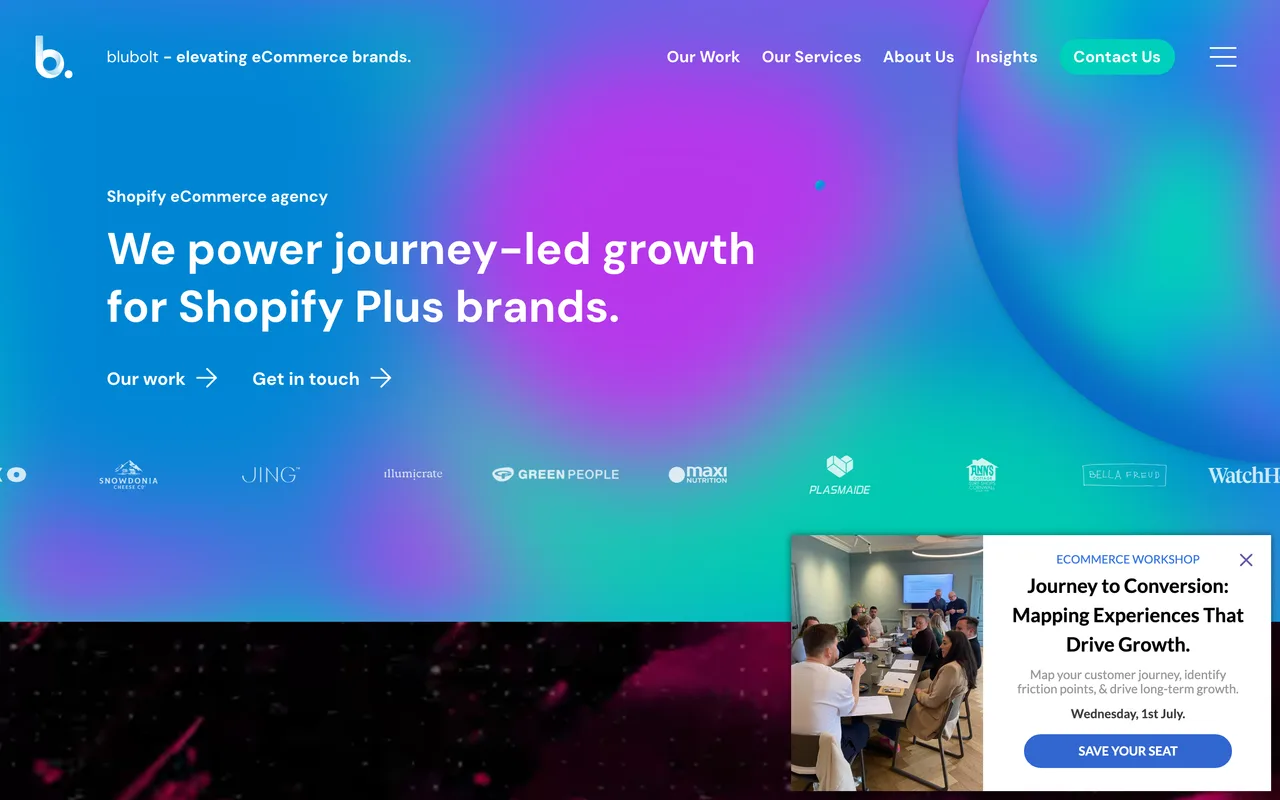
Blubolt has been going since 2006 and is based in Bath. They are a Shopify Plus agency that designs, builds and grows stores for high-growth brands, typically those with annual revenue from 5 million pounds upward across fashion, beauty, homewares and food.
That focus on established, higher-revenue brands shapes everything they do. If you are already at scale and need a partner used to that level of complexity and traffic, they fit the brief. Best for: high-growth UK brands at scale on Shopify Plus.
7. IWD Agency
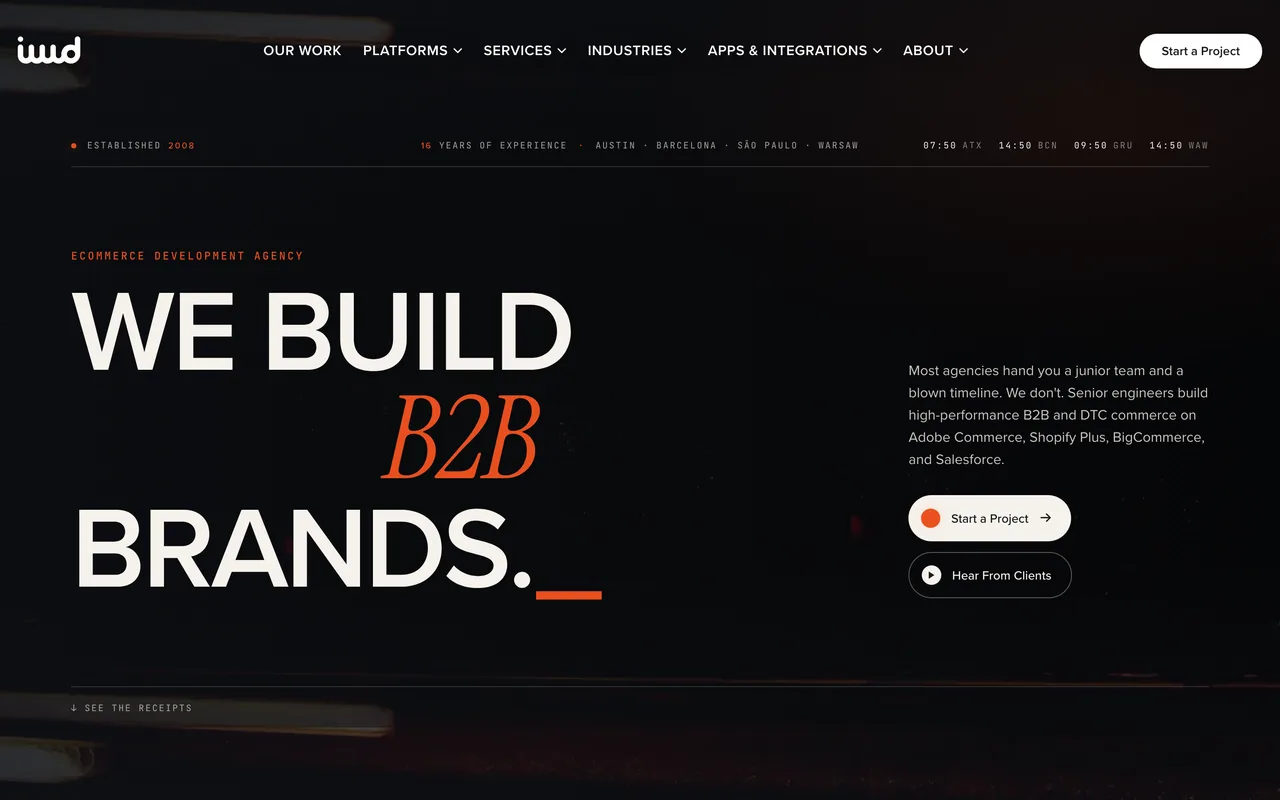
IWD Agency, founded in 2008, is based in Austin with offices in Barcelona, Sao Paulo and Warsaw. They build B2B and DTC stores across Shopify Plus, Adobe Commerce, BigCommerce, Salesforce Commerce Cloud and WooCommerce, and they handle headless commerce and ERP integration.
Their edge is platform range. When your project involves complex integrations, a large catalogue or a B2B setup that does not fit neatly on one platform, having a team fluent across several is genuinely useful. Best for: B2B and DTC brands needing platform flexibility and complex integrations.
8. Groove Commerce
Groove Commerce, founded in 2007, runs from Baltimore with offices in Philadelphia, Austin and Orlando. They are an ecommerce design, development and marketing agency and a BigCommerce Elite Partner, building stores on BigCommerce and Shopify and measuring the work against sessions, conversion, orders, average order value and revenue.
The thing to like is how they measure success. Tying the build to real commerce metrics keeps everyone honest about what the site is for. Best for: US brands on BigCommerce or Shopify wanting build plus performance marketing.
How to choose the right ecommerce web design agency for you
Start with your actual situation, not the portfolio that looks nicest. Three questions sort most of it out.
First, what platform do you genuinely need? If you are a fast-growing DTC brand, Shopify Plus specialists make sense. If you have a big B2B catalogue, multiple regions or ERP systems to connect, a multi-platform team like IWD will save you pain. Do not let a one-platform agency talk you onto their only option if it is the wrong fit.
Second, what is the real job? A store that looks stunning but loads slowly and never ranks is a problem dressed as a win. Be honest about whether you mainly need build craft, or whether visibility and conversion are the things actually holding revenue back. If shoppers cannot find you, the prettiest store in your category still loses. That is where an engineer-led approach that bakes in speed, search and conversion earns its place.
Third, who does the work and how do they report? Ask who is on your account, how often you will see numbers, and which numbers. Press for revenue and conversion, not just traffic charts. If you also want help being found beyond the build, the same logic that drives the best SEO agencies in the UK applies: senior people, transparent reporting, and work tied to outcomes you can bank.
Frequently asked questions
How long does it take to design and build an ecommerce site?
A focused Shopify build often runs six to twelve weeks. Larger projects with migration, custom features, integrations or a headless setup can take three to six months or more. The honest answer depends on catalogue size, how much custom design you want and how quickly you can supply content and decisions. Building search and speed in from the start adds little time and saves a costly retrofit later.
Should I hire an in-house team or an ecommerce web design agency?
For most brands, an agency is the more sensible call until you are large enough to keep a full team busy. A good agency brings designers, developers and platform specialists who have shipped many stores, which is hard and expensive to replicate in-house. In-house wins once your volume is constant enough to justify the headcount. Many brands run a hybrid: an agency for the build and heavier lifts, a small internal team for day-to-day updates.
Can an ecommerce web design agency work white-label for my agency?
Yes, some do. SEO Engico is white-label capable, which means the build and search work can be delivered under your brand for your own clients. If that is your model, confirm reporting, communication boundaries and how the work is presented before you start.
How much does an ecommerce web design agency cost?
Cost scales with the size of your catalogue, the platform, how much custom design and integration you need, and the depth of ongoing search and conversion work. A simple Shopify build sits at the lower end; a multi-platform B2B project with custom features and headless architecture sits much higher. The useful question is not "what is the cheapest" but "what return does this site need to produce". Judge value by the revenue and conversion the work delivers, not the line on the invoice.
Where to go from here
Match the agency to your real bottleneck and the choice gets simpler. If you mainly need platform craft on a specific stack, several teams above are excellent. If your store needs to be found, load fast and convert as much as it needs to look good, that is exactly what SEO Engico's ecommerce web design is built for. The fastest way to know what your store is leaving on the table is to look at the numbers, so book a search performance audit and we will show you where the revenue is hiding.